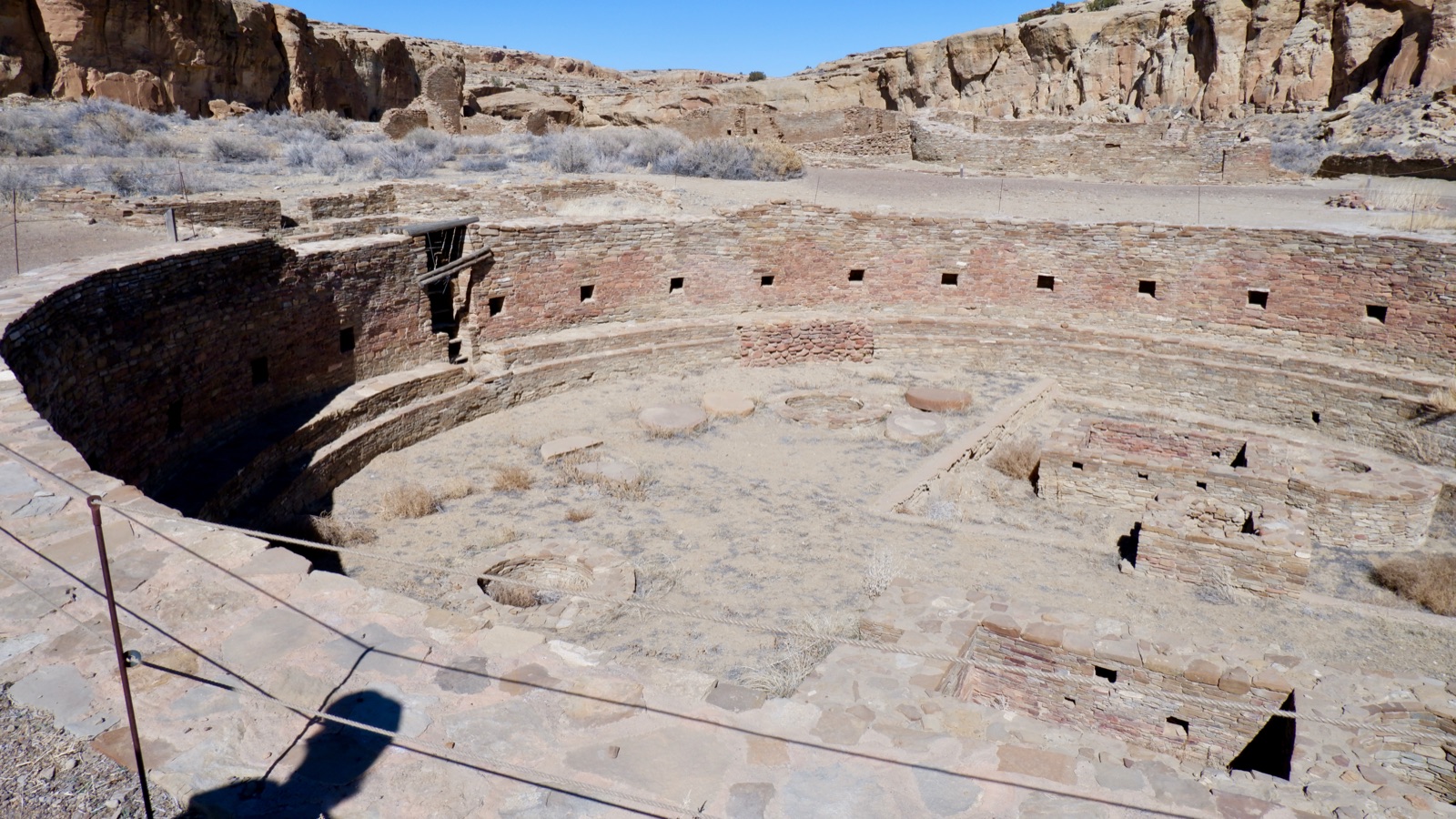
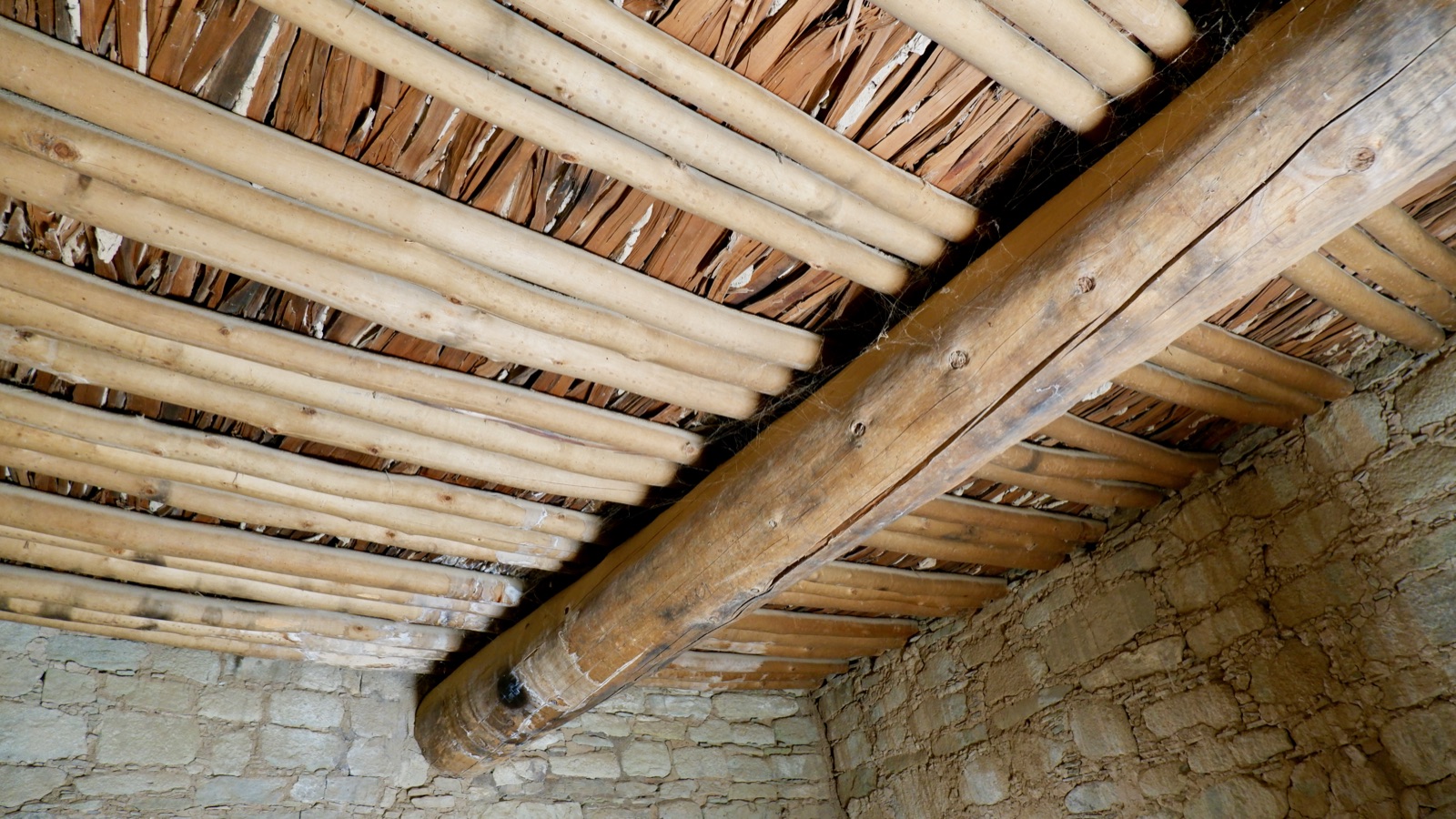
Yesterday we drove to Chaco Culture National Historic Park, a little known park in the northwest corner of New Mexico. It preserves a canyon with several so called “big houses” built by Chaco people, which modern pueblo people see as their ancestors. It is another landmark showcasing the culture of ancestral pueblo people like Wupatki, Mesa Verde and Capitol Reef. The big houses might have been used for religious purposes, and were built around 1000 years ago. They show great architectural skill. Some of them are 4 stories high, and all sites are perfectly aligned with several celestial phenomena, such as the equinox, winter and summer solstices and certain moon phases. There are many ceremonial round structures called Kivas throughout the structures, and the scale is quite impressive. The buildings are built from stone, wood and clay, and have a sophisticated core-and-veneer construction which made their walls strong enough to hold the weight of 4 stories.
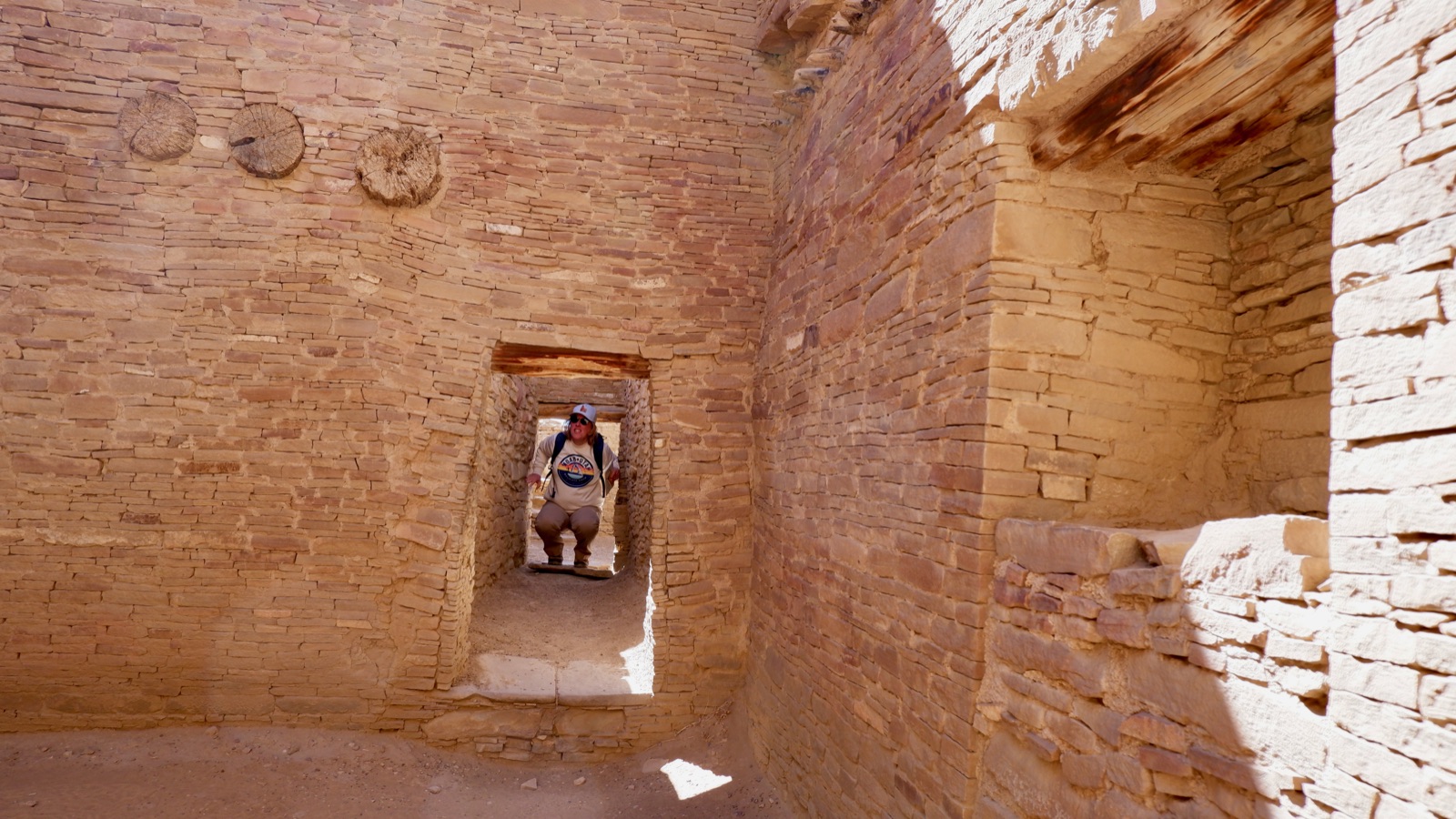
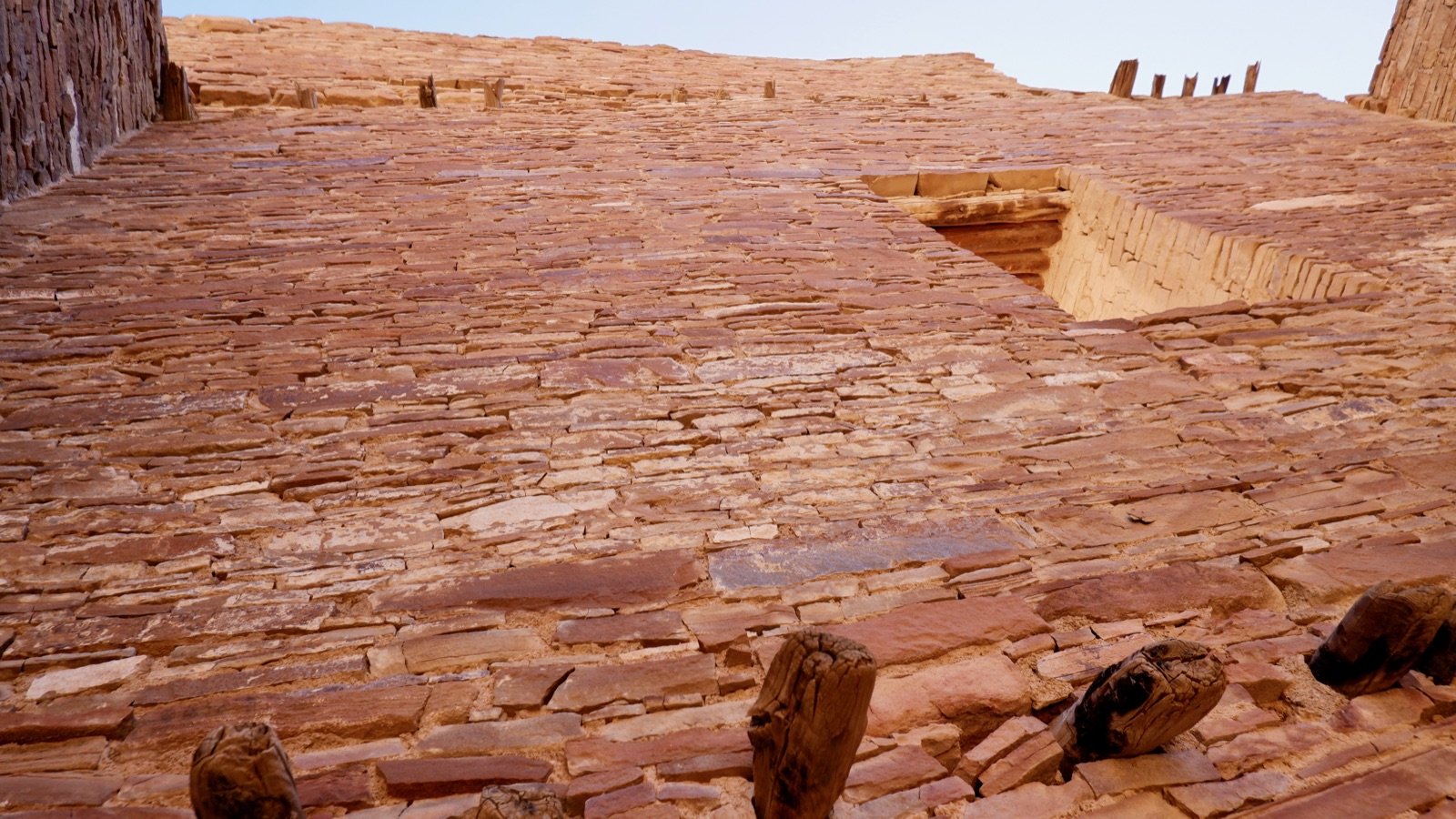
The site is really impressive. Thinking of the Chacoans hauling stones from all over the canyon, using stone axes to cut down massive timbers and carry them on foot for 20 or more miles, all in an area where summer temperatures are in the 120s and winters see substantial snow, is quite impressive. It is very interesting to note that their Kivas are round, but there is no evidence that they ever used a wheel for any form of transport.
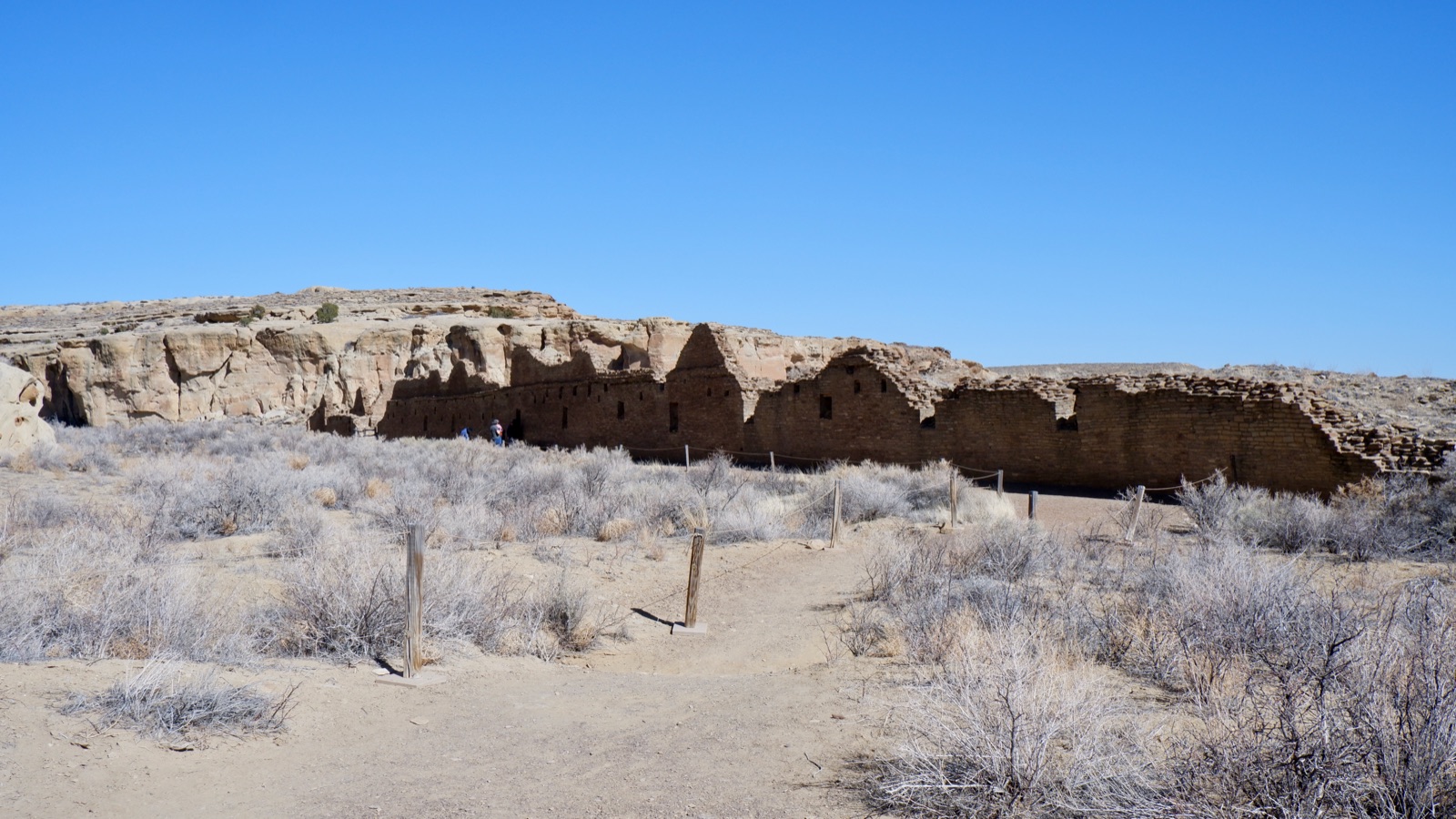
But the context in which this park exists is even more interesting. The park itself is internationally recognized as a world heritage site, but it does not have a paved access road. It is indeed located in a remote part of New Mexico, but there are plenty of other parks in remote locations with great paved access roads. The last 20 miles leading to it are a poorly maintained dirt road that became washboarded. Think rumble stripes that cause your wheels to buzz or hum loudly when you are drifting out of a lane, except much bigger, covering the entire road and creating an incredibly bumpy ride. I initially drove very slow - 5 to 10 MPH seemed like the only speed at which the bumps weren’t crazy - until someone more experienced with such roads passed me at 35 MPH, which initially seemed like craziness, but once I tried it turned out to be a better choice. At that speed the wheels just “hover” over the bumps and the ride becomes smoother. You loose a fair amount of traction of course, so I had to be extra careful with turns, stops and other sudden maneuvers.
You might just chalk it up to bureaucracy. The road to the park goes through land under the jurisdiction of several agencies, and it is hard to get all of them to agree and to prioritize putting up the money required to pave it. There is certainly some amount of that going on. Orit suggested an additional explanation. Could it be a continuation of the institutional discrimination against native peoples? It may not be intentional or conscious, but it is hard to ignore the stark difference between the road and accessibility of Chaco Culture National Park and Grand Canyon National Park. Another question that points in the same direction is - why is Chaco culture not considered part of the heritage of all the people of the US? Immigrants today view themselves as a continuation of US heritage, but for most people that heritage often starts in 1492 with Columbus’ discovery of America, or with the declaration of independence in 1776. Why would it not start in 850, when the first Chacoans settled in Chaco Canyon? or in 600, when the first ancestral Pueblo people settled Mesa Verde? We know those dates now, and have lots of evidence about their life and culture. But virtually no one knows about those cultures, they are hidden from most school curricula, and the sites preserving their remains are difficult to access.
As we approached the park entrance, we came upon a broken down minivan, stuck in the middle of the road. The washboarded road took its toll on his minivan’s suspension and without reception he couldn’t call AAA. We gave hime a ride to the visitor center, and after we were done with our visit we also gave him a ride back to his car to wait for AAA. He did recommend to us an interesting movie about Chaco Canyon, which we watched last night. 24 hours later we got a text from him that he was toed ok and his car is being fixed.
(previous post here)
(next post here)