It was already a few days ago that we left Austin on our way to Houston, but it feels like much more time has passed!
The drive to Houston is a short 2.5 hours on the freeway and goes through the Texas German Belt, where lots of people still consider themselves Deutschtexaner. We spent some time going up and down between the small little towns that dot the area, and sampled some of the local specialties - some Czech inspired Kolach, some Texas BBQ in a little shack that does not look like it contains such delicious food. The scenery was also nice, with cows grazing against a backdrop of rolling green hills. It is easy to see how Germans immigrants felt at home here.
We stopped at a few very small towns, most of them dominated by train tracks that run along main street. The train is no longer the lifeline of these towns, but very long trains still run through them somewhat frequently. In one of those towns we went into an antique shop, and the shopkeeper told us about one of the largest outdoor antique fairs that just ended in some other nearby town. Later on that day, on some side road, we drove through several miles of mostly empty giant white tents and large empty parking spaces, with lots of trucks loading stuff everywhere. It would have been quite confusing had we not known this was the fair in the process of being dismantled.
About 45 minutes before arriving at our Airbnb we started driving through the outskirts of Houston. This is to say Houston has a lot of sprawl, and though it has only about 2 million inhabitants, its metro area is very large. From where we were entering, there was one giant warehouse after another along both sides of the highway for quite some time. It is unclear what exactly is being stored and shipped from those, but there were definitely a lot of them. Perhaps it being a large port at the edge of the Texaplex, where 21 million people live, might explain it.
Arriving at our Airbnb it was clear that we are in a different climate zone. The air was hot and humid, and it had just rained. Our Airbnb had good A/C so we were comfortable, though we did bring our pillows from the car, like we started doing everywhere we go. Orit says they are our transitional objects, helping us through the many transitions of travel.
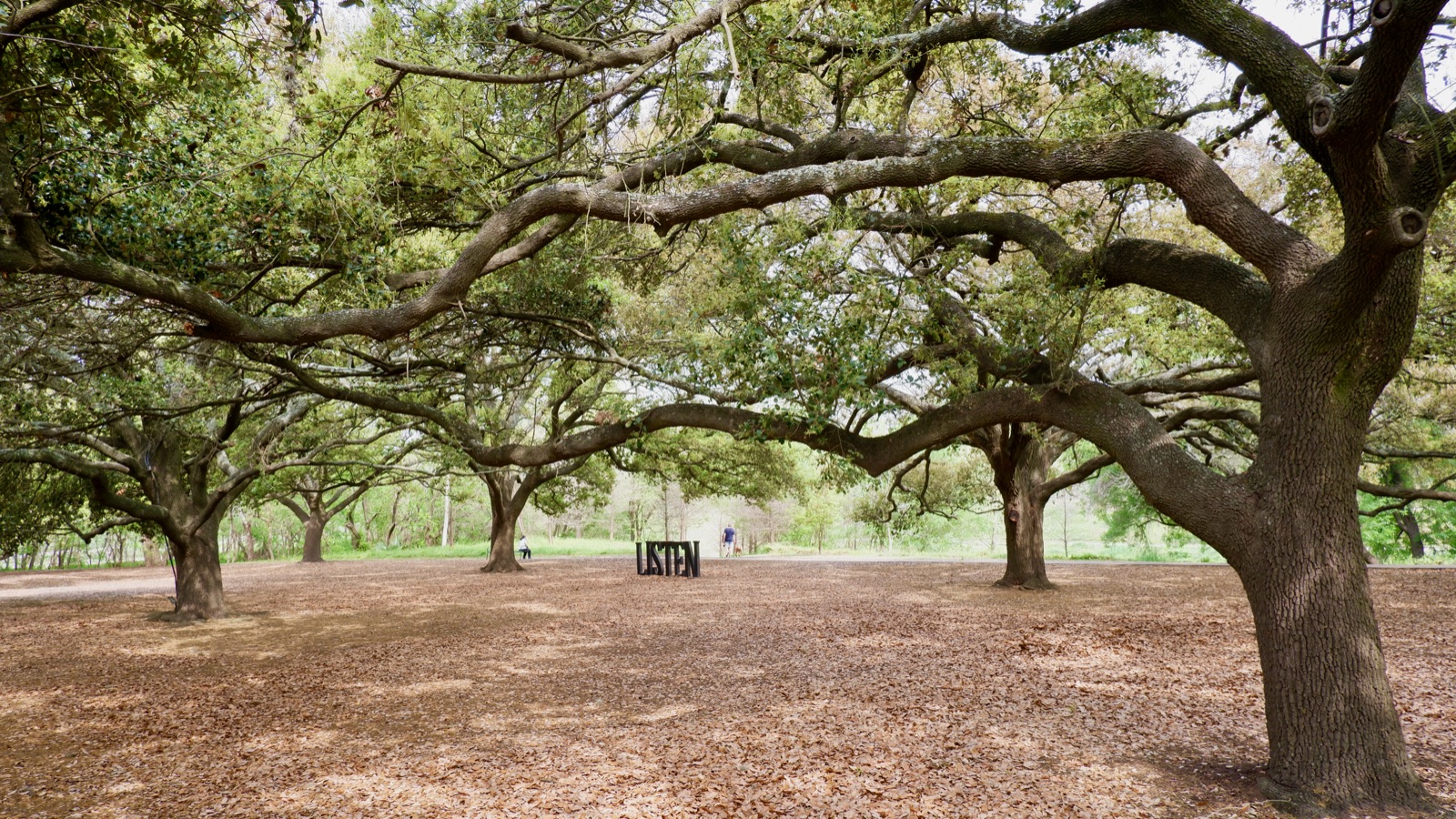
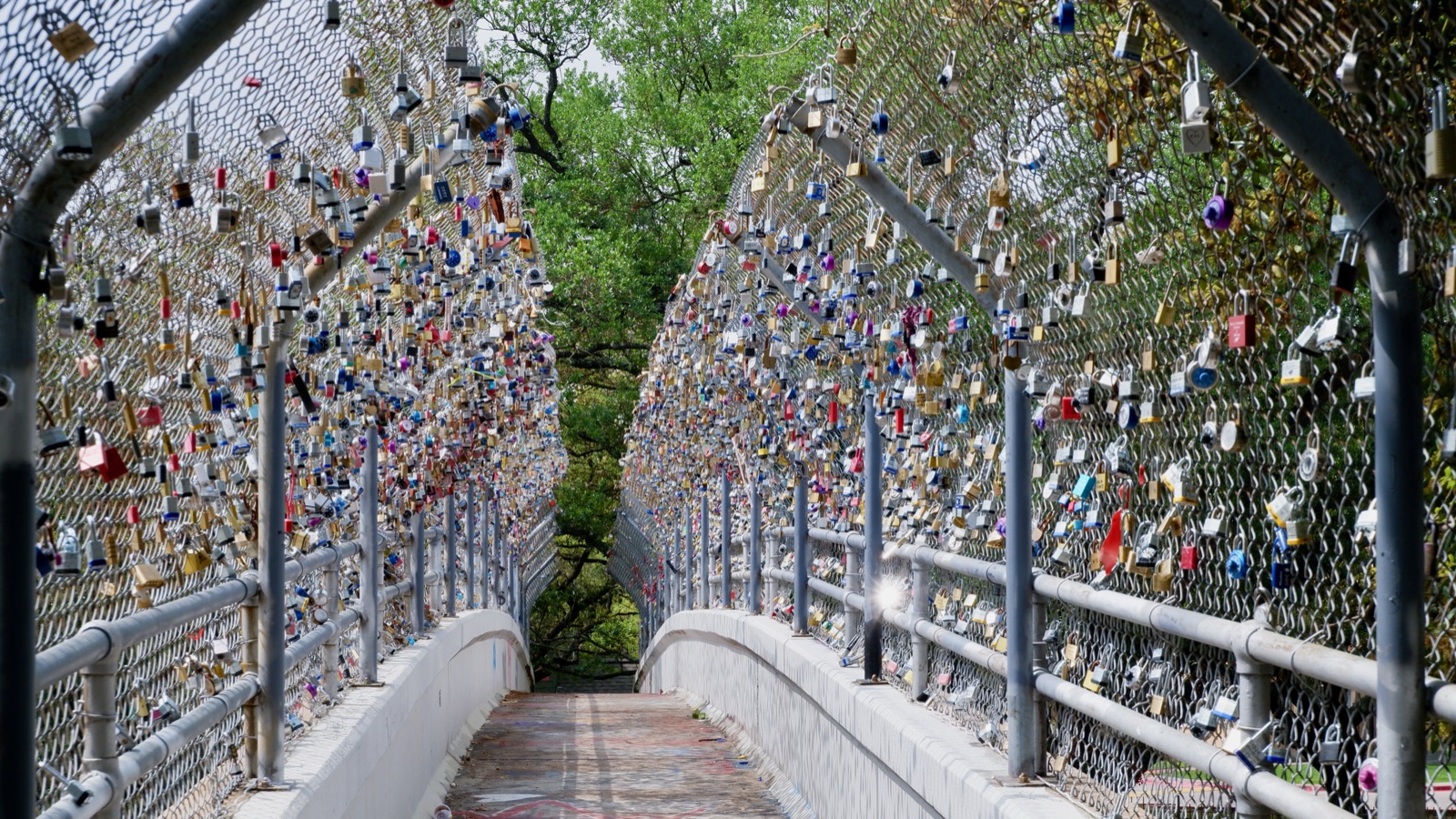
The next morning we went for a walk in Buffalo Bayou which runs through Houston and is close to our Airbnb. It is a really nice river side park, with people walking their dogs, jogging or biking. Despite the humidity and heat, it was pretty nice outside, and it was certainly nice to feel the occasional breeze. When we’ve walked enough and wanted to head back through the city, we crosses some major street over a pedestrian bridge full of locks (kind of like the famous bridge in Paris) and entered the neighborhood on the other side via a gate. It turned out to be a gated community, but not an upscale one. The gates seemed to be more for keeping the people that lived there inside rather than protecting them from people coming from the outside. I still don’t know the name that neighborhood or who built it and why, not do I know if there is any special criteria for living there, such as being low income ore something like that. I do know that at some point it started feeling a bit uncomfortable to be there, and though I don’t think we were in any real danger, I do admit that I was a bit nervous. We eventually found two women sitting in the shade outside their homes - drinking beer at 2 pm - that explained to us how to get out. The neighborhood next to it was nice, and was clearly gentrifying. I couldn’t help thinking that putting a bunch of low income people in a gated area without convenient ways in and our was not necessarily motivated by the best interests of those low income people. The existence of the locks gained an entirely new meaning.
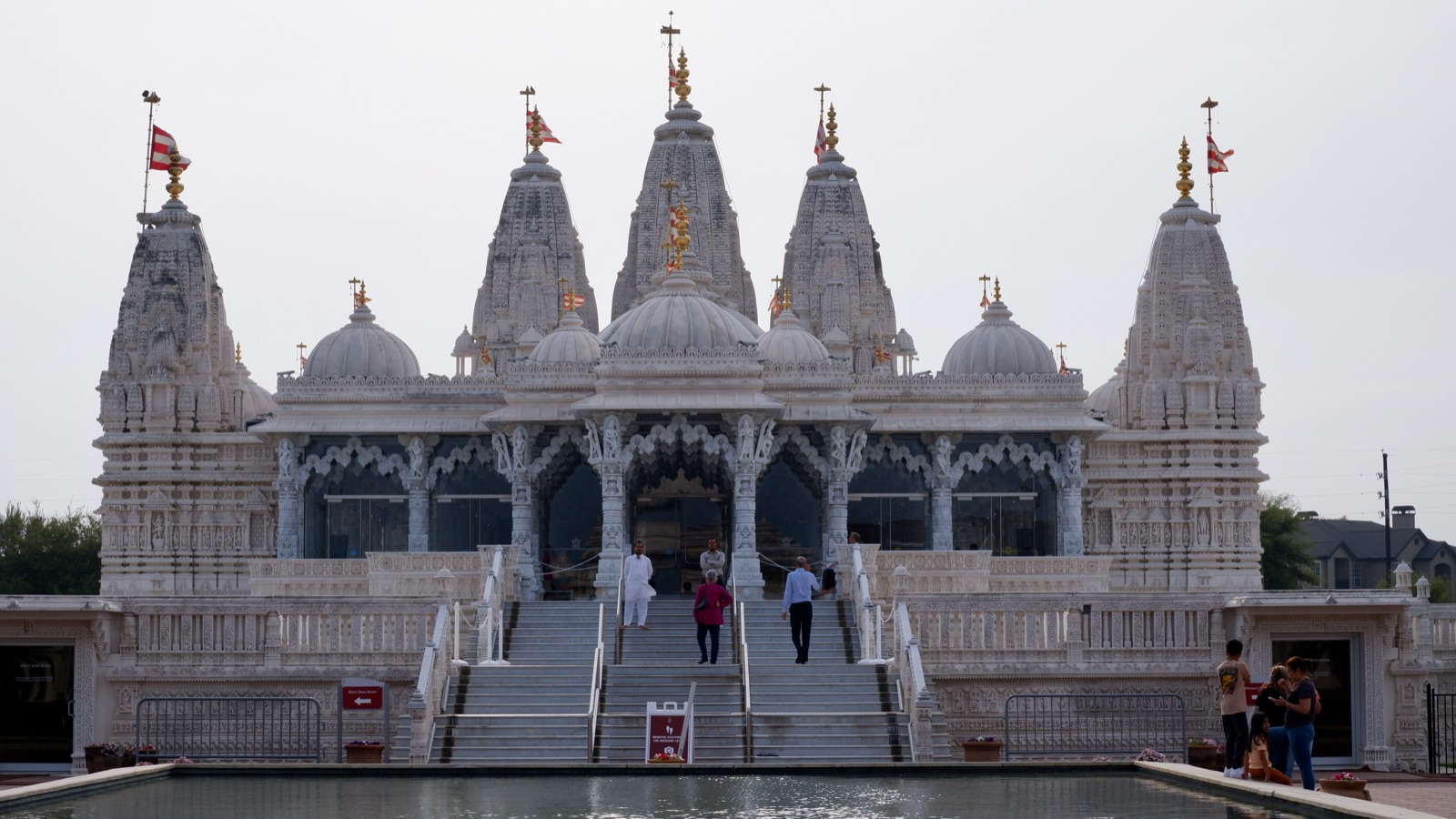
That evening we had dinner plans with friends who moved back to Houston from the Bay Area. On the way to dinner we stopped at BAPS Shri Swaminarayan Mandir, a large and elaborate Hindu temple that welcomes members of the public to visit. The temple is designed according to plans and templates that are thousands of years old, and was built using the same techniques. Supposedly it doesn’t use modern building methods, and was built from marble excavated in Italy, shipped to India, and after being delicately carved, shipped to Houston. It is prohibited to take pictures inside, but the outside is pretty impressive too
We met our friends, who are immigrants form China, at a Chinese restaurant, that serves real Chinese food. We had lots of great food and enjoyed their company, it was good to catch up with old friends. We probably wouldn’t have gone out with them to dinner in the bay area, so in a way it was nice that they moved all the way to Houston!
Because the museums were closed on that day, we decided to visit them in the morning of the following day. The problem was that we also had a reservation in New Orleans for that same next day. So we were going to do what we had specifically decided not to do - do some activities and to a transfer in the same day. And not just any transfer - New Orleans is 350 miles away…
So we did it anyway. We started with the Holocaust Museum, which had good exhibition about RBG - late Supreme Court Judge Ruth Bader Ginsburg. I am a big fan of her work and of her persona, and was already very familiar with all the information in the exhibit. But as I entered the exhibit and saw the familiar pictures of RBG and read about the familiar cases she brought to the Supreme Court before she was a Judge, I teared up. It was very emotional for me, seeing all the amazing work she has done, how she managed to get to such an influential position despite all the nearly impossible hurdles that she faced every step of the way. It was also very emotional to think of the continued assault on many of the values she held dear, which I hold dear. I can definitely say there is progress, in the sense that the situation today when it comes to civil rights is - generally speaking - better than it was 100 years ago. But I think progress never comes easily, and the numerous setbacks and assaults on civil rights in the US and against democracies in the world are very troubling.
As we were preparing to leave, a group of 13-14 year old girls was reading about one of the cases she litigated - having to do with sterilization - and were debating what the word meant. Orit overheard their conversation and stepped in to explain what it meant, which then lead to a brief but interesting discussion about the case, about RBGs work and about Amy Coney Barrett, the conservative mirror image of RBG who replaced her when RBG passed away in 2020. It was a nice moment. The girls were very engaged and listened very intently, and though their teacher eventually showed up, he didn’t intervene and let the teaching moment continue. Orit always enjoys teaching, and taught kids about civil rights as a student job. It was nice to see her connect with that part, even for a brief moment.
Next we went to the Museum of Fine Arts Houston, where we didn’t have much time, but we still managed to see two really nice exhibits. One was Extraordinary Realities by Shahzia Sikander. She was born in Pakistan and initially trained as an artist there, and later continued her education in the US in RISD. Her work uses combines the influences of both cultures, and I found it really captivating. For the first time I saw work that I really wanted to have in my house. Orit really liked it too!
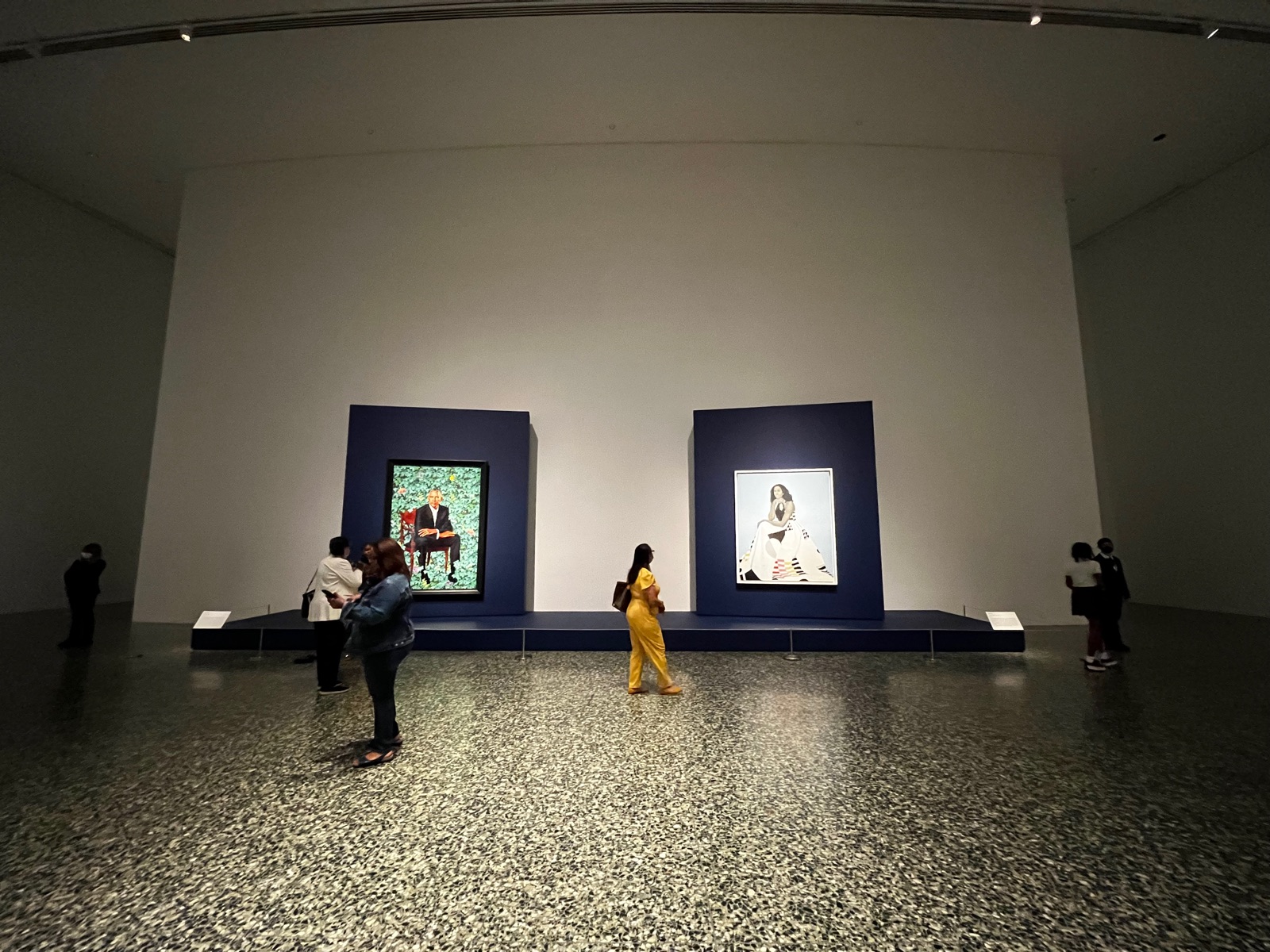
The second exhibit was the portraits of Barak and Michelle Obama. The works themselves are really nice, and are groundbreaking in that they are not done as formal presidential portraits, and are done by black artists. But seeing them here, in a city that is 22% black, was very special. In the short time we were there several black women took selfies with the Michelle Obama picture. There must be hundreds, if not thousands of selfies like that taken every day. That she was the first lady for 8 years clearly is clearly very inspirational and motivational for many young black woman.
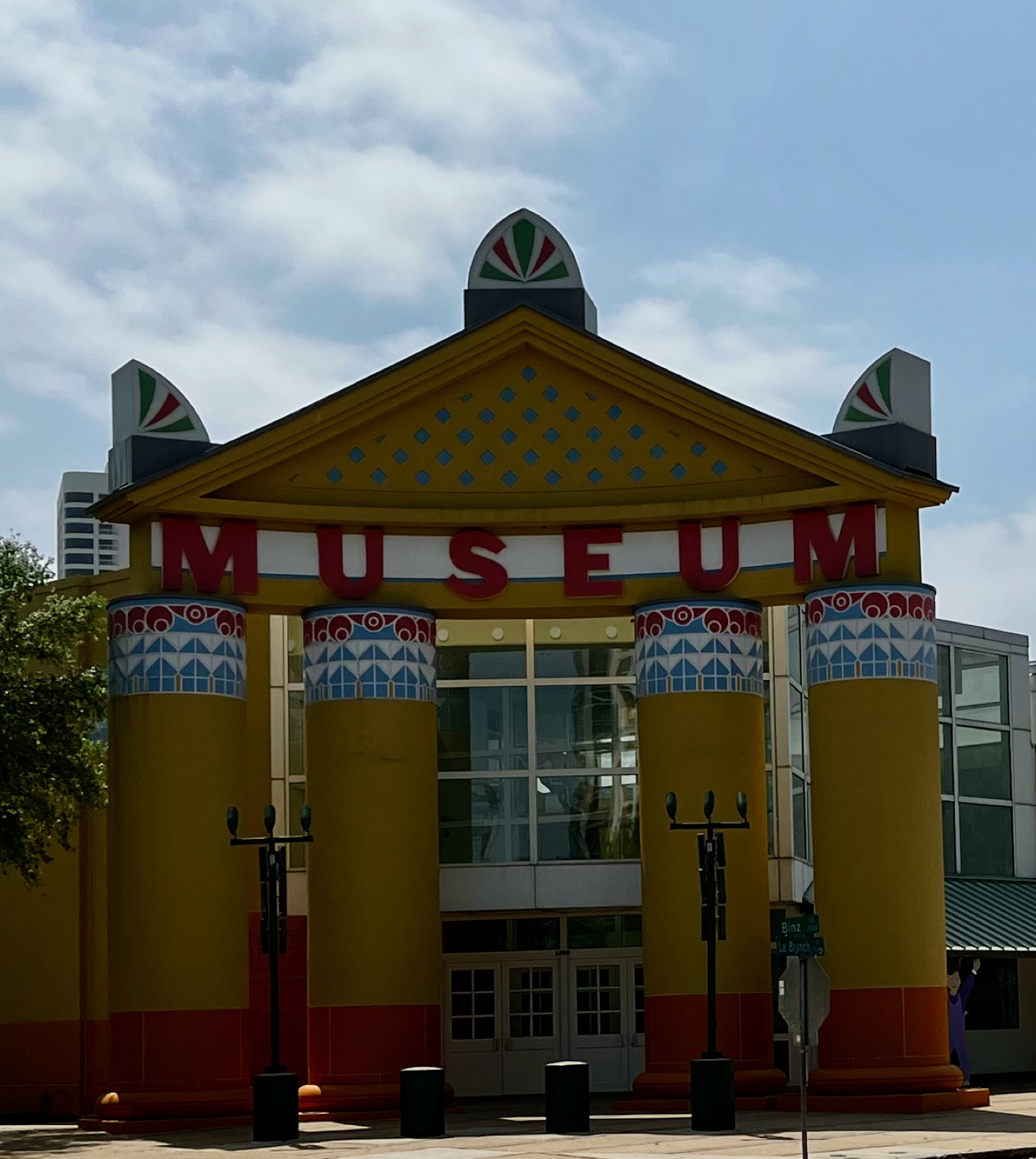
After all this museum business, we were hungry. We had lunch at a nice lunch spot - albeit with two young dudes in the table next to us that talked so loudly it was hard to focus on anything else - and then hit the road. On the way to our car we walked by the Children’s Museum Houston, which was designed by Denise Scott Brown and Robert Venturi. These are the same architects that are featured in Lessons from Las Vegas, the 99% invisible episode mentioned in the post about Las Vegas. The museum building is pastel colored, and has the word “MUSEUM” in huge bright letters on top of the entrance. There is much more about the ideas behind that design in the episode, but it certainly draws inspiration from Las Vegas.
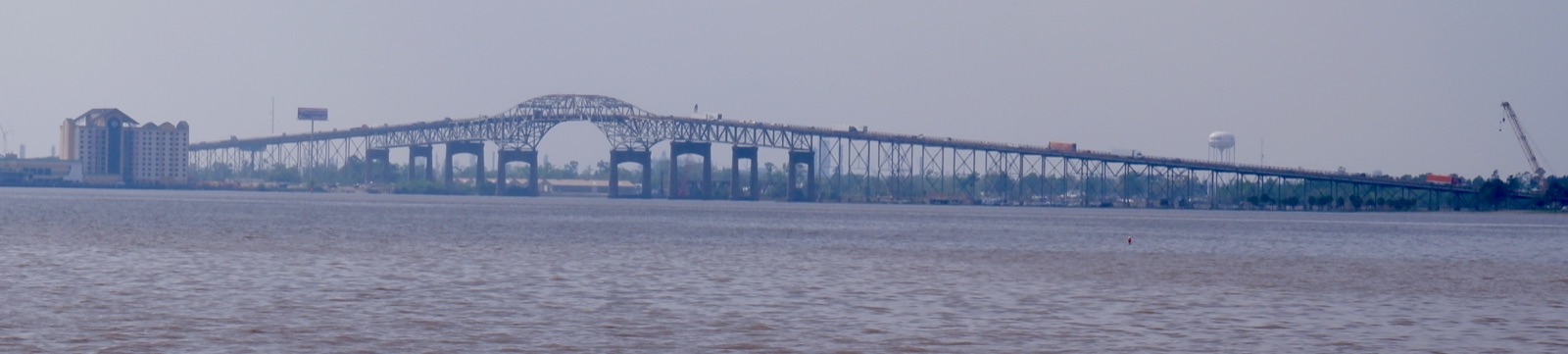
It was 2 pm at that point, and even if we drove straight to New Orleans, we would have arrived at 7:30 PM. Instead, we got off I-10 at Lake Charles, and after admiring its deserted lakeshore and view of the super tall Calcasieu River Bridge, we took a small back country road through the marshlands between I-10 and the gulf, and enjoyed the view. The area is very rural, but has a lot of very nicely kept and tidy homes, unlike many other rural communities we’ve encountered along the way. Overall. it was very pastoral - literally. We stopped at the small community of Lake Arthur to snack on some yogurt and bread, and chatted with two ladies who were born in the area and lived there all their lives. They were happy to tell us everything about the town, its ups and downs, and the people that live there. It was nice to get a glimpse into a totally different world than the one we came from.
We eventually made it to New Orleans late at night. It was quite an exhausting day, filled with lots of excitement and drama, and we were happy to get to our quirky hotel in New Orleans, or NOLA (Near Orleans, Louisiana) as it is often called here.
(previous post here)
(next post here)