We drove out of Sedona on our way north. We stopped for a nice breakfast at a busy cafe in Flagstaff, and stocked up on some food and supplies. We then drove up back through the high desert landscape near Grand Canyon, but this time we kept going further north, towards Page, AZ.
Right outside town there is a massive tourist attraction - Horseshoe Bend. An area where the Colorado river does a perfect horseshoe. There is of course a parking lot, an entrance fee and a 0.5 mile walk to it. The walk is short enough that everyone goes - young and old, people with disabilities, everyone.
And the spot is worth it. It is really beautiful.
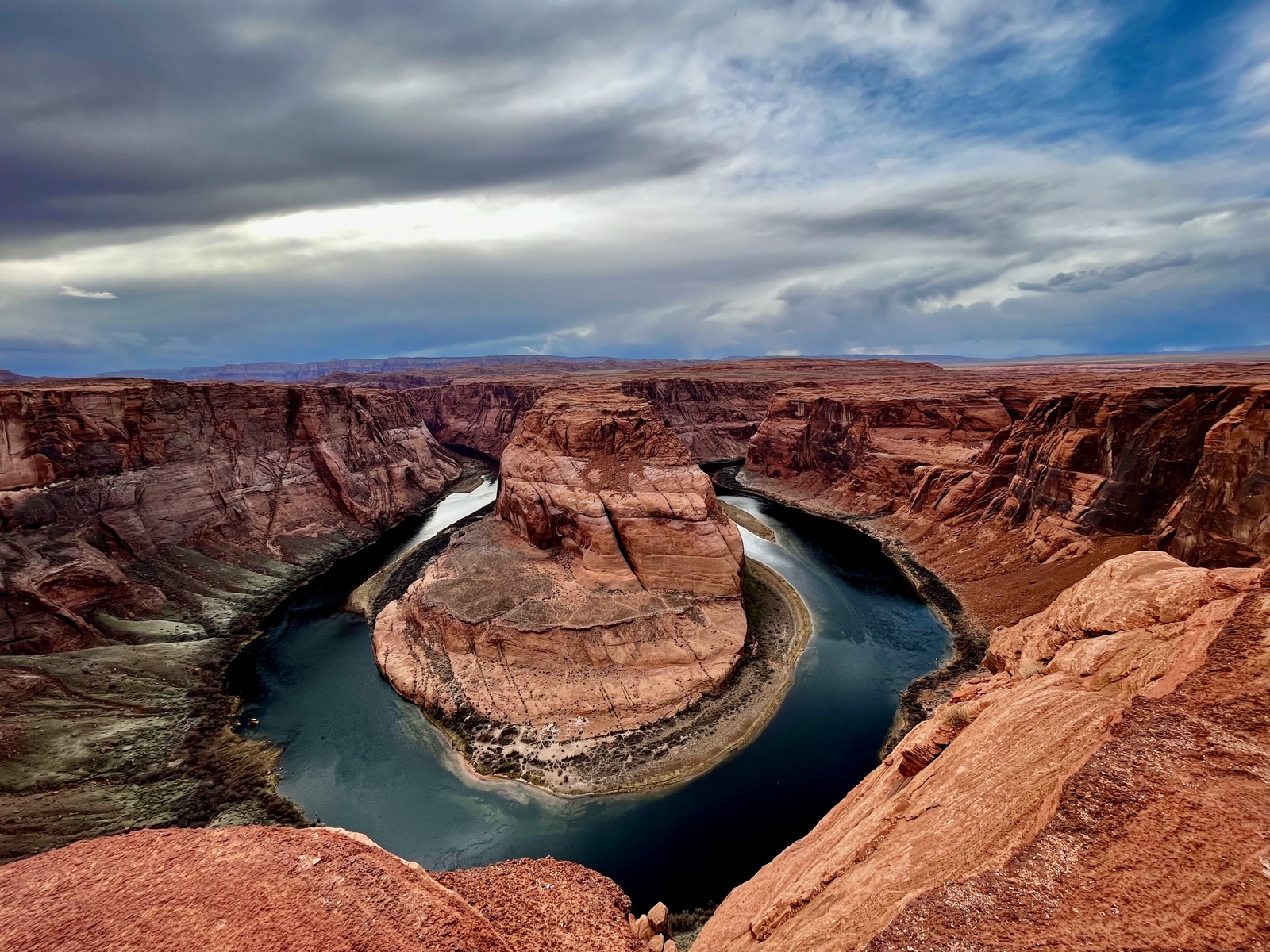
As you can see, the water level is very low. A little harder to see, but still very evident, is that the water flow is very slow. It is unclear to me how such a meek river could have created all the beauty that is the Colorado river canyon. And I’m pretty sure it wasn’t always like that - the mega-drought in the southwestern US is creating record low in all the reservoirs in the south west, and putting pressure on states to make difficult tradeoffs around who can use water, and for what.
As if to prove the previous point even more strongly, we drove up to Long Rock campground, which in theory is on the shorts of Lake Powell. The lake was formed when the Glen Canyon Dam was completed in the early 1960s. The campground used to provide access to the lake via sandy beaches, but due to the lake Powell is now many many tens of feet below its “full reservoir” level, and the campground is nearly a mile from the water. It makes for a sand trap where unsuspecting drivers get stuck, and a surreal landscape.
All this is probably an indication of a larger point - current human numbers and lifestyles depend on a certain level of abuse of nature, for example creating a huge dam for electricity and water storage, flooding large swaths of land in the process. And whenever such abuse takes place, unintended consequences follow. The basic fact likely is - the weather in many places in the southwest is not conducive to populations of the size that currently reside there, and requires a much more restrained use of water and electricity. But here we are…
(previous post here)
(next post here)