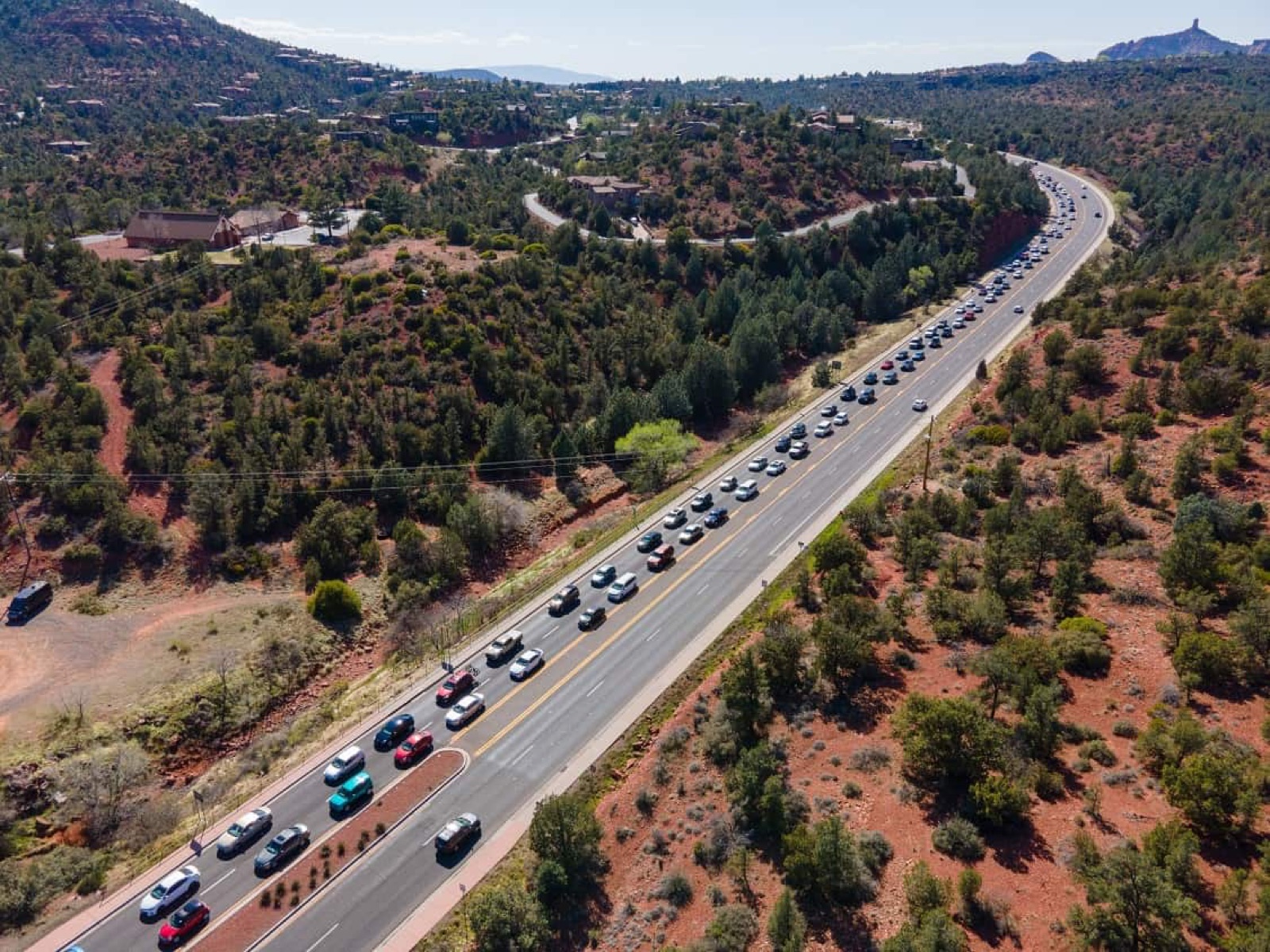
When we visited Sedona recently and got stuck several time in pretty terrible traffic jams like this, it got me thinking about the causes. I think that traffic issues are often caused by cities scaling faster than their roads do, and while Sedona is not a very big city - around 10,000 people according to the 2020 census, It does get a fare amount of visitors - 3 million visitors in 2018 according to the Sedona chamber of commerce. Most of those visitors are not a surprise to Sedona city leaders. The visitors are all coming to hotels, campgrounds or registered Airbnbs, so the city knows where they are staying, and can get data on how long, and use that for planning. So if we assume each of those guests stays for a week and that they are mostly spread around 8 busy months of the year, we get about 87K visitors in Sedona every day. So let’s call it 100K residents and visitors who are all moving around Sedona every day.
There are plenty of 100K sized cities in the US - according to wikipedia there are roughly 250 cities with population sizes between 100K and 300K. Anecdotally, from my experience visiting and living near some of the cities on that list, those traffic issues are not common in that size of a city.
So what makes Sedona suffer so badly with traffic?
Some relevant analogies can be drawn from how very fast data networks connecting servers in a datacenter are built. The typical way to build those networks in the early 2000s was to take a rack of servers - a closet with up to 40 servers - and connect all of them to a switch - think of the servers as houses, the rack as the neighborhood and the switch as the wide street in the center of it where you have to go as you are driving from one house to another inside the neighborhood. It is common for there to be a switch powerful enough to allow any server inside the rack to communicate with any other server without having to slow down due to congestion.
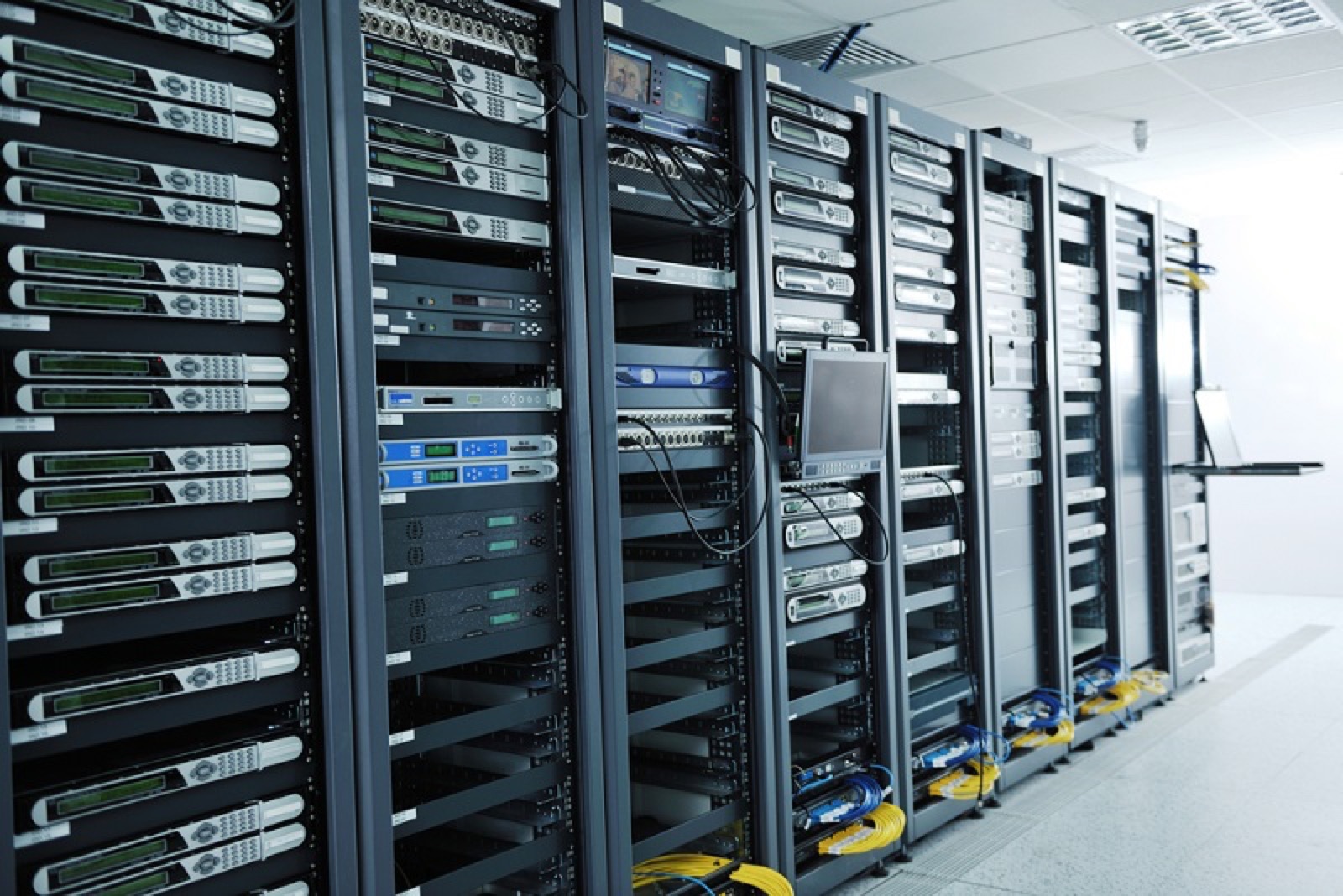
As you add more servers though, you eventually run out of space and need to add another rack (build another neighborhood). Typically, engineers would connect the two rack switches with a cable called an inter connect or uplink. That cable would become a bottleneck, because no matter how big it was, it was not able to accommodate all the traffic between every server on one rack and every server on the other rack. So you would get congestion. This is exactly the situation when you have a main street that is the only way to get from one neighborhood to the next. And this is exactly how Sedona is built - a bunch of neighborhoods with nice small streets inside, but that don’t interconnect. To go from one to the next you have to go out to the single main road.
Why was this done that way? I can imagine it is great for the residents. No one wants to live near a large street, and if your street connects to the next neighborhood, it will have to be large and will have more traffic than if it was a cul-de-sac. So it would not surprise me if we discovered that the residents all pushed for no inter connects between neighborhoods.
So how did engineers solve the congestion on the inter connect in the data center? They did it by, among other neat tricks, creating multiple inter connects, which basically meant there was now more than one way to get from a server on one rack to a server in another rack. And because data networks can’t have loops in them (more than one way to get from point a to point b means there must be a loop somewhere), they also added a control layer that told each server which path to take in order to get to any other server on the other rack. There are lots more great details in the Jupiter Rising paper from Google if you’re curious.
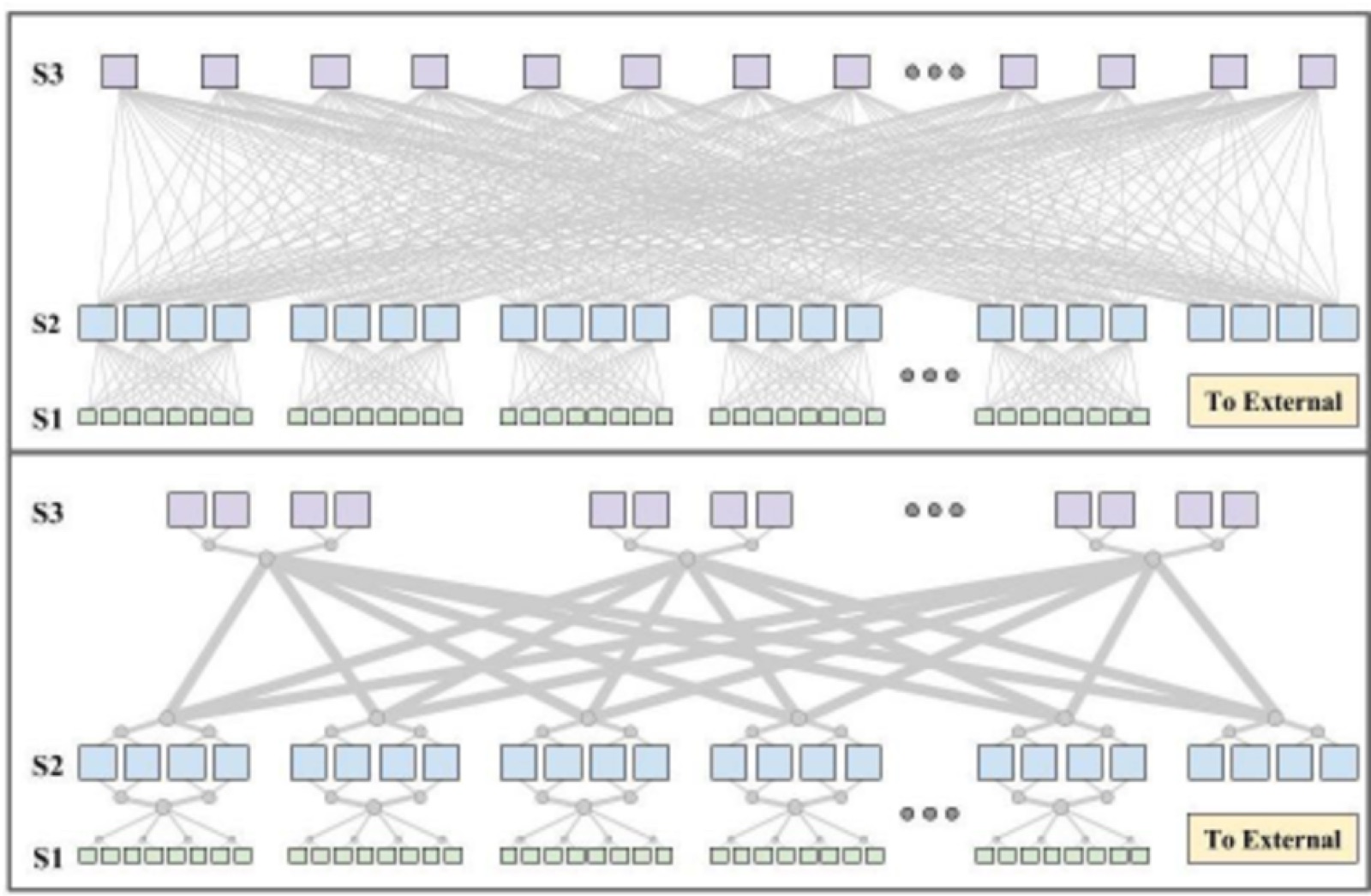
And naturally, to do this in a city with humans making decisions would be difficult. How do you convince people that building the inter connect streets would ultimately be beneficial to everyone? Would closing down the whole city to vehicular traffic and making everyone use self driving cars which are directed by a control layer similar to the one in the data center, making sure each car takes a different route so no one street gets congested or over trafficked even work? Or perhaps only visitors would be disallowed from driving into the city with their cars, and forced to park in large park-n-ride lots outside town, and use the self driving cars, where residents continue to use their own cars? Would this be an opportunity to leap over the public transit phase (Sedona currently does not have an effective public transit system to speak of) and do an experiment of a city whose public transit is entirely self driving? The very vague plan that is currently being considered does not give me too much hope.
I guess we’ll have to stand in terrible traffic the next time we come too.