We said goodbye yesterday to our Airbnb in the Nambe pueblo. It is a very cozy Airbnb, situated in an old adobe style house that is nicely renovated. We stayed here for 3 nights and it started feeling like home. It is great to be somewhat stationary for a little bit, and have a base from which to explore.
At some point during our stay, our host stopped by to chat, and we talked for a long time. It was a really interesting conversation, though she did most of the talking. She started by telling us about the history of the place, and how she and her husband bought it several years ago and renovated the structures to create several Airbnbs, but how the vineyard, which is also part of the same property, was bough by another buyer. She is a retired white woman, but the property is inside ancestral Puebloan land, which is a bit unusual. After a few sentences she started referring to the other buyers as “the Indians”. She explained how water rights are an issue and how the ongoing drought makes the nearby creek have too little water for “the Indians” to water the vineyard. She also made some racist comments about how they prefer to not work the vineyard and instead get money from the federal government. I was worried about how the conversation might go from there. But then we moved to a different subject, and told us about how they recently hosted a family of Afghan refugees that were being resettled in the US. It is a dramatic story - the family, a dad, a mom and a few very young kids, comes from a rural area near the border with Pakistan, and they knew nothing of the ways of a western family. Everything was new to them - cooking inside the house, on a stove. Using an oven. A fridge. Supermarkets. Car seats. She had to explain stuff to them, using largely signs and gestures, as they speak no english, and there wasn’t always a translator available. She talked for a long time, telling us story after story about her experience of hosting that family, until it became clear we are probably the first people she’d told about it. When we discussed this later, Orit suggested that hosting an Afghan family might not be considered a purely good thing in those parts, that people might have objections and view this more critically, so she may be just keeping those stories to herself. The more we expressed our admiration to our host for her actions, the more she felt comfortable and the more her stories flowed. I was very moved by her stories, it is quite rare to get an opportunity to play such a role in someone’s life, and our host seemed to just do it because she could not not do it. It made me think of baby A, which Orit and I fostered during 2020. We also taught him about the world, we also communicated with him with more than just words. And for me, it also felt like I could not not do it. There was no other realistic option.
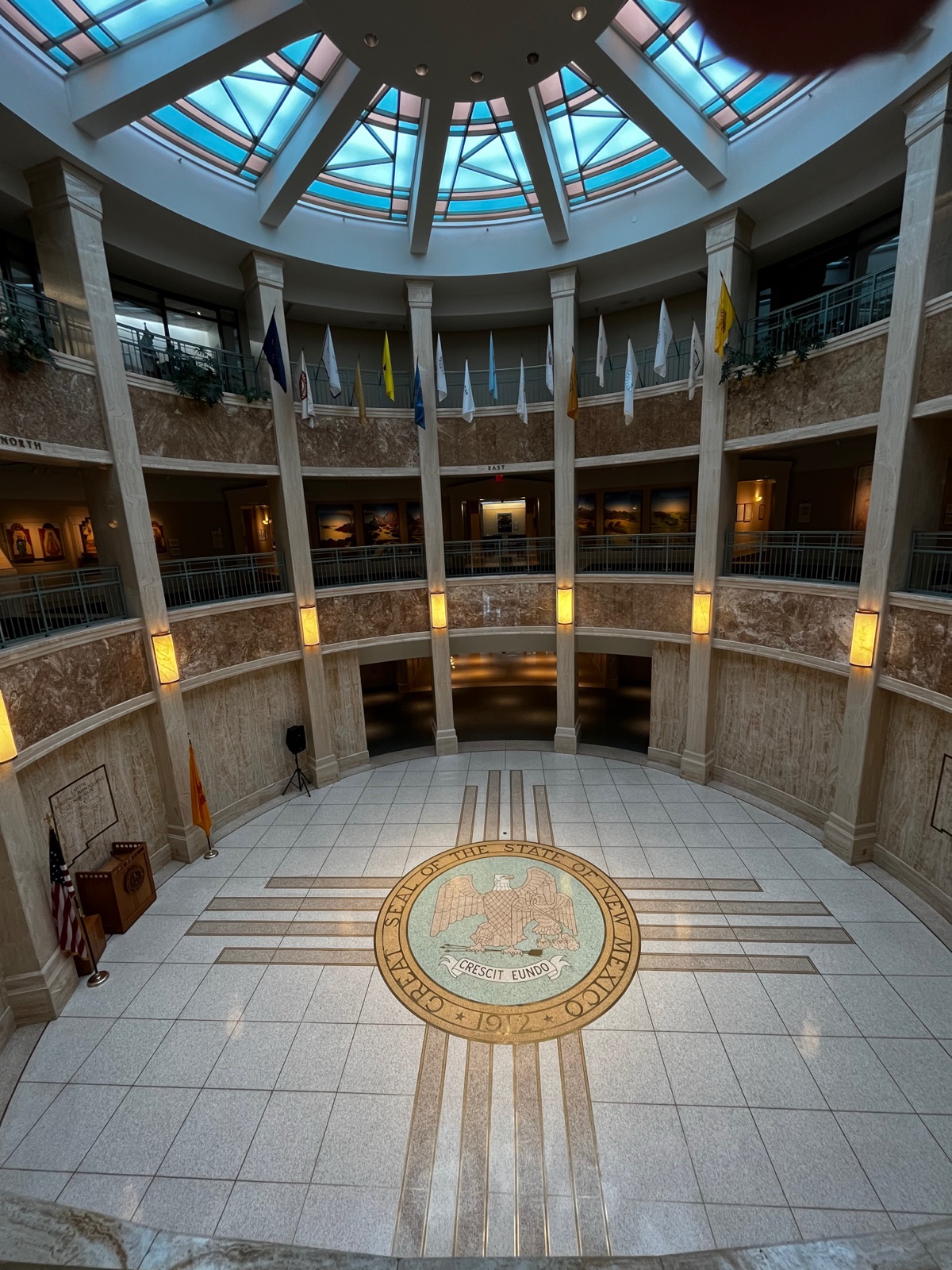
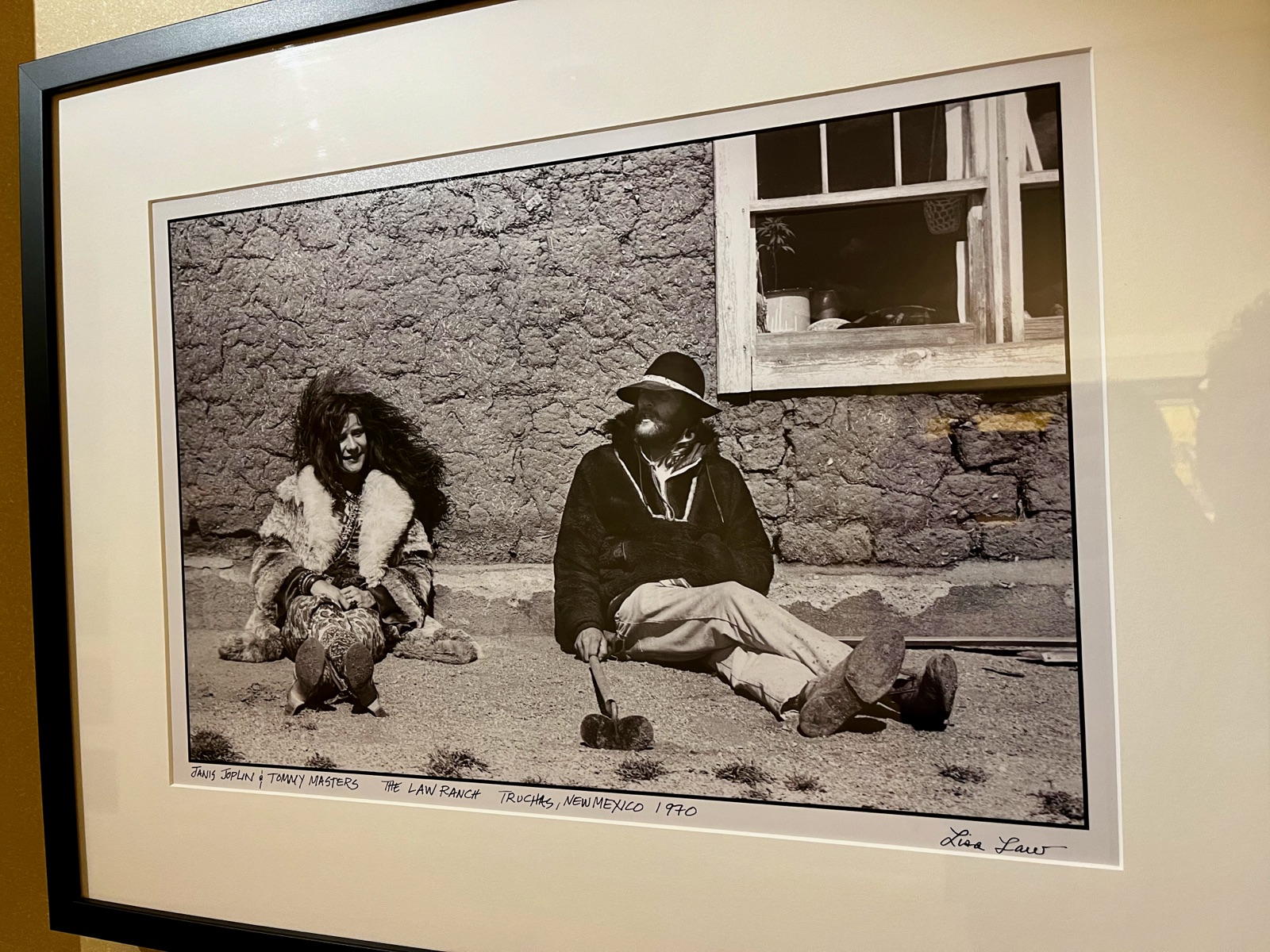
The next day we visited Santa Fe, but our timing was off, as most of the museums we wanted to visit were closed, and the Georgia O’Keefe museums, though open, required advanced reservation due to covid, and there were no available slots. So instead we went for a walk through the old town, and also visited the state capitol building. There is a lot of local art throughout the building, and its architecture is interesting - it is the only round capitol in the nation. Aside from enjoying the art and architecture, it was a reminder of the ideals on which this country was built. The idea that government is of the people, by the people and for the people, and that as such anyone should be able to come in and observe their government, is a really compelling idea. Though the reality is often very far from that ideal, on that day in Santa Fe I was excited to exercise my right. It was also cool to come across a pic of Janice Joplin, which I didn’t expect to find in this place, but I guess Taos was just her vibe back in the 60s.
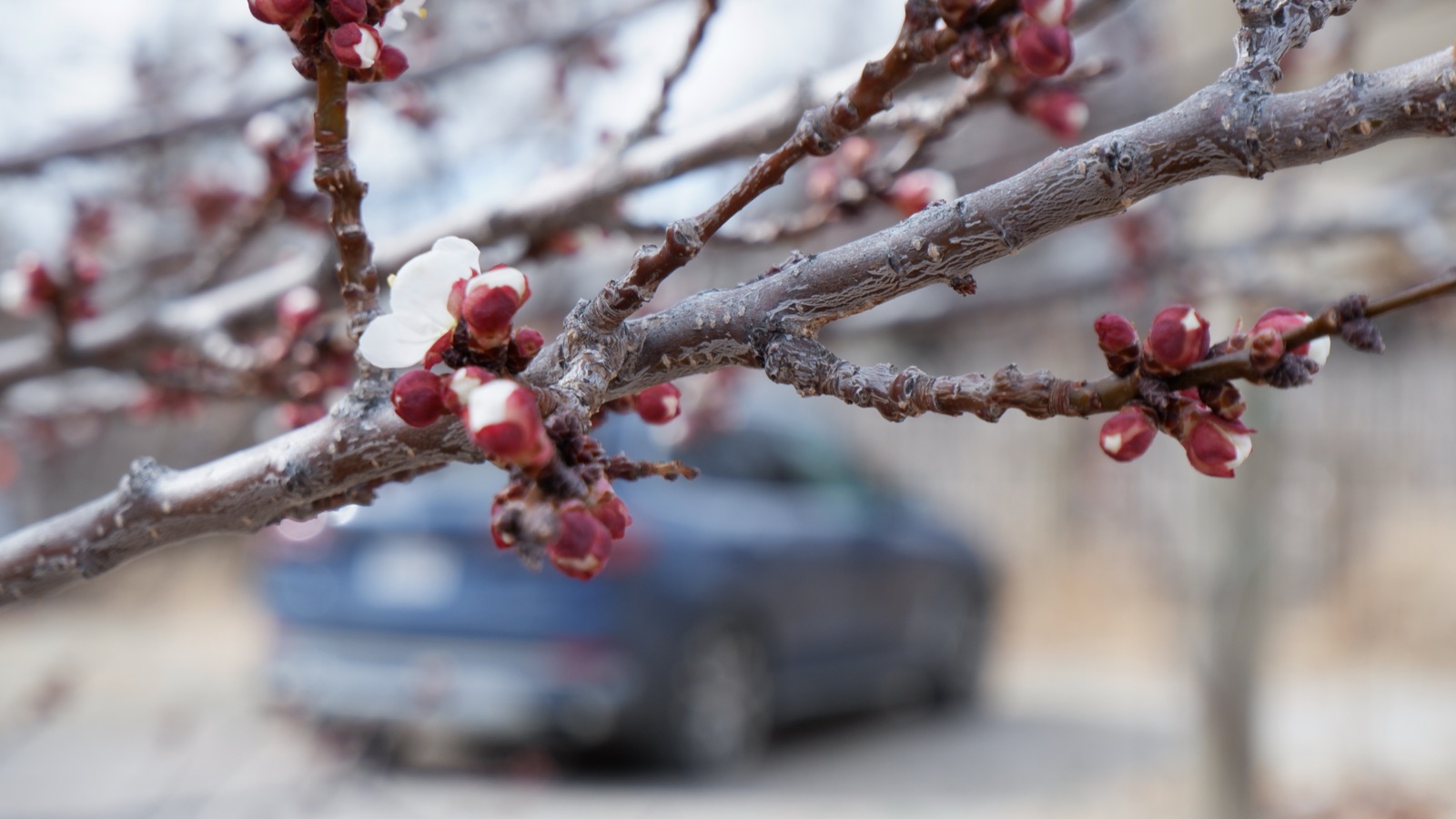
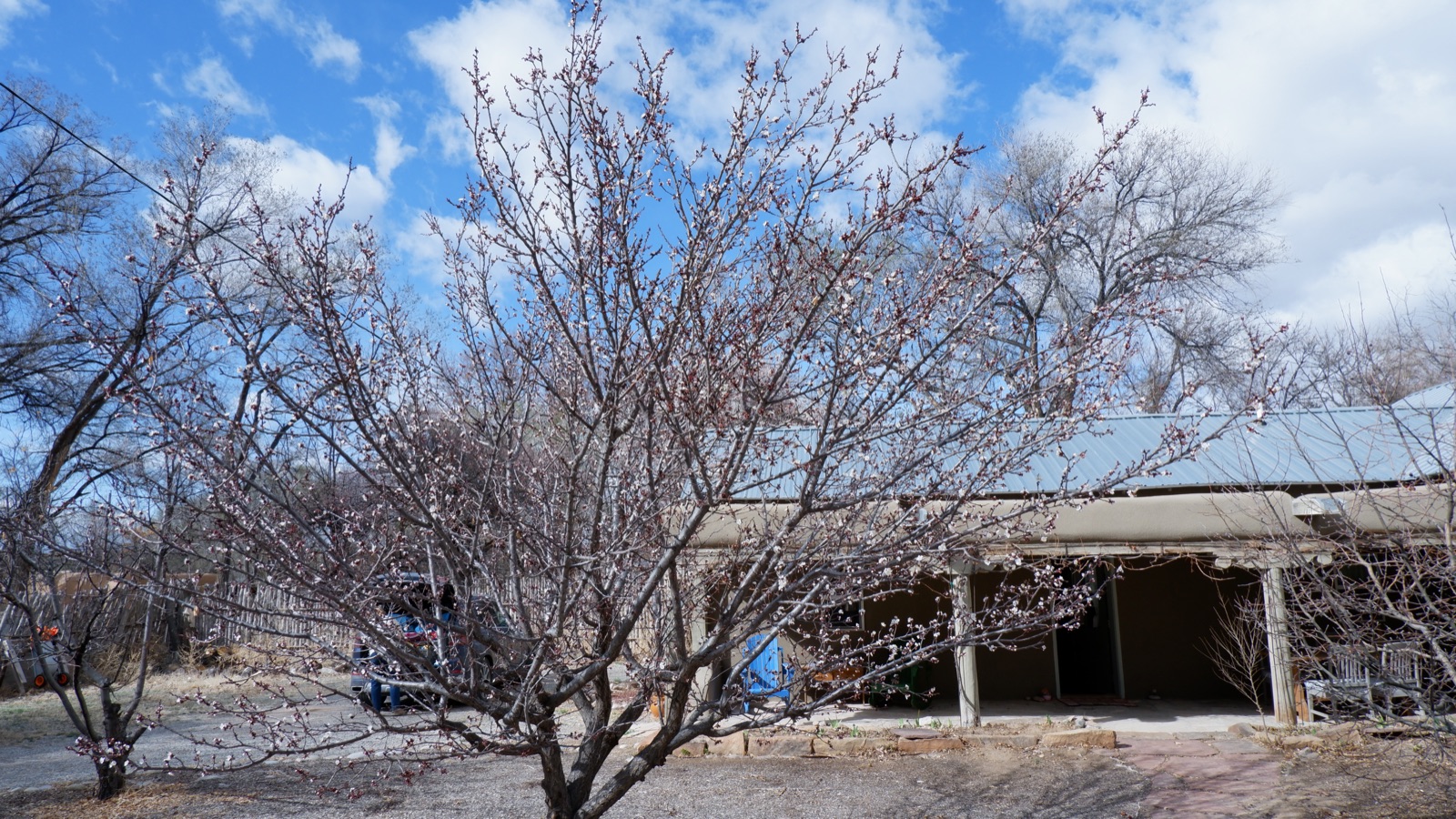
By the time we left our Airbnb, the apricot tree in the front garden of our Airbnb started to blossom, and gave us a flowery send off.
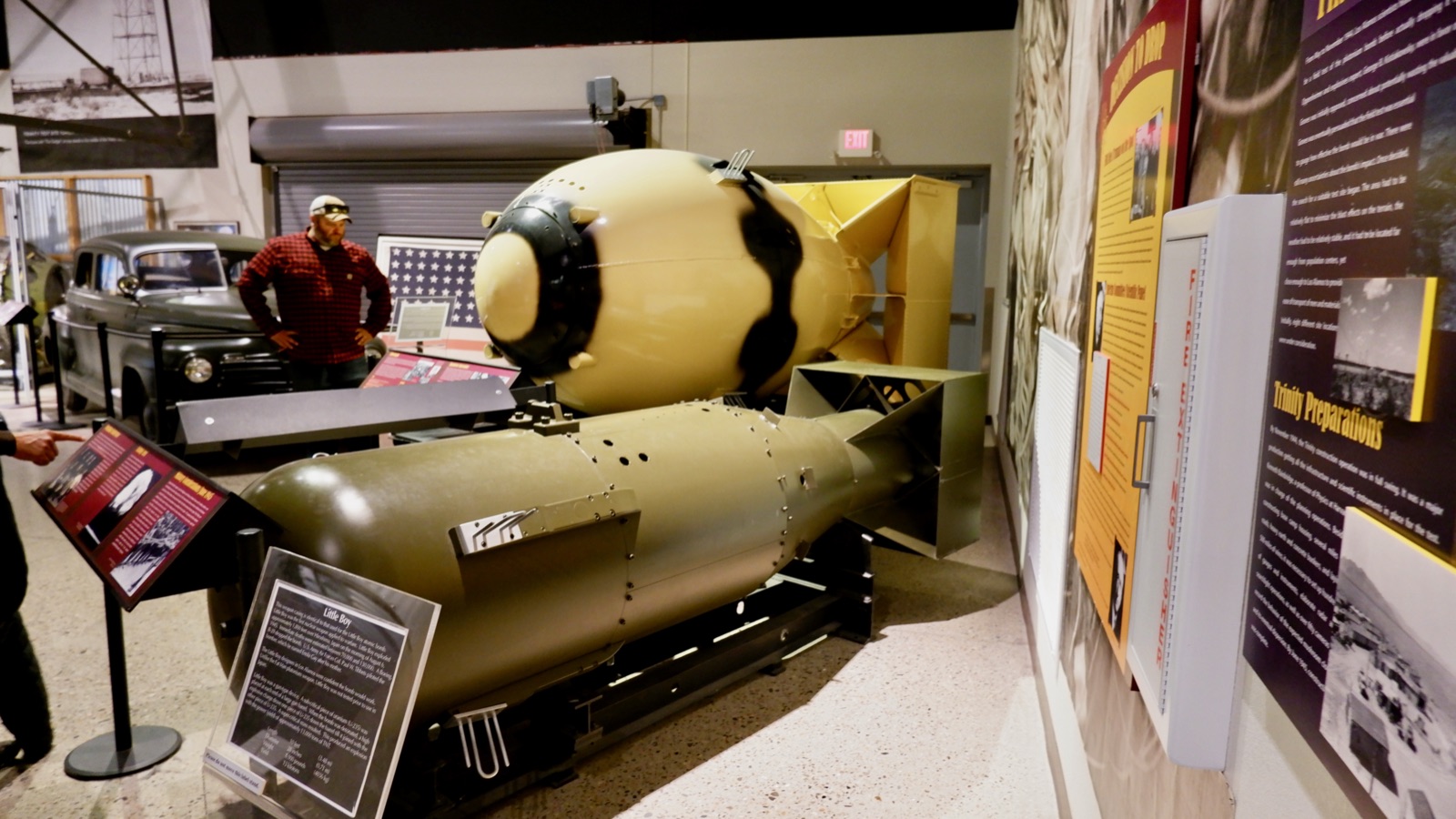
We drove south to Albuquerque and stopped for a bit at the National Museum of Nuclear Science & History, to catch some of what we missed at Los Alamos. It is a pretty small space, but with lots of interesting facts and artifacts from the Manhattan Project years and beyond. It does present a pretty straightforward argument that dropping the bombs was ok because it saved lots of American lives and cut the war short. It is a common argument, but it made Orit and me have a heated discussion about the ethics of that action. I came out of it still thinking that Truman (and FDR before him who authorized the development of the bomb) did the right thing in using them. There has been so much written about that decision that I will not try to add to the arguments on either side, but I’ll just say that the deciding factor to me was not whose lives were saved - American, Japanese. All lives are equally precious. For me ending the war sooner was the deciding factor. Continuing the war would undoubtedly lead to a lot more death and suffering, and the advantage the US had at that particular moment was not guaranteed. What if the Japanese were able to develop an atomic bomb? There are lots of risks to continuing the war, and choosing the path that would end it sooner seems to me to be the right choice. It is a terrible situation, though. No matter what you decide, a lot of people are going to die as a consequence.
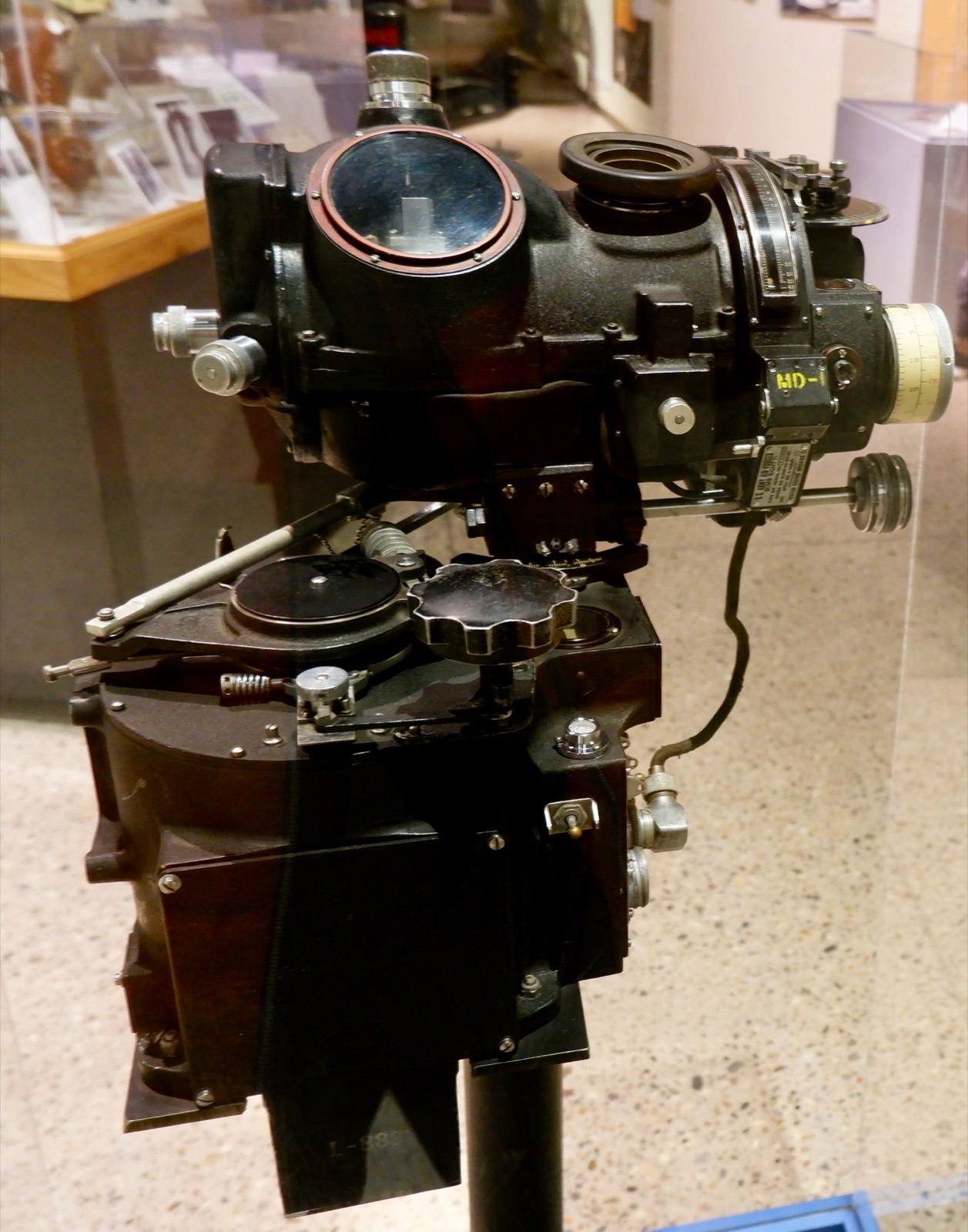
Interestingly, the museum displayed a Norden bombsight, which allowed US planes to drop bombs with greater precision than was possible at the time. Basically a maybe genius maybe crazy dutch engineer named Carl Norden designed this an analog computer, taking into account the various important factors in aiming a bomb from an airborne airplane - the bomb’s weight, the speed of the airplane, the altitude, windspeed - and calculates the trajectory. Based on that it tells the gunner where to aim. This is trivial for todays computers, but to build an analog system that did that was pretty cool. There is a really interesting podcast about it by Malcolm Gladwell called The Bomber Mafia. I believe he also wrote a book about it.
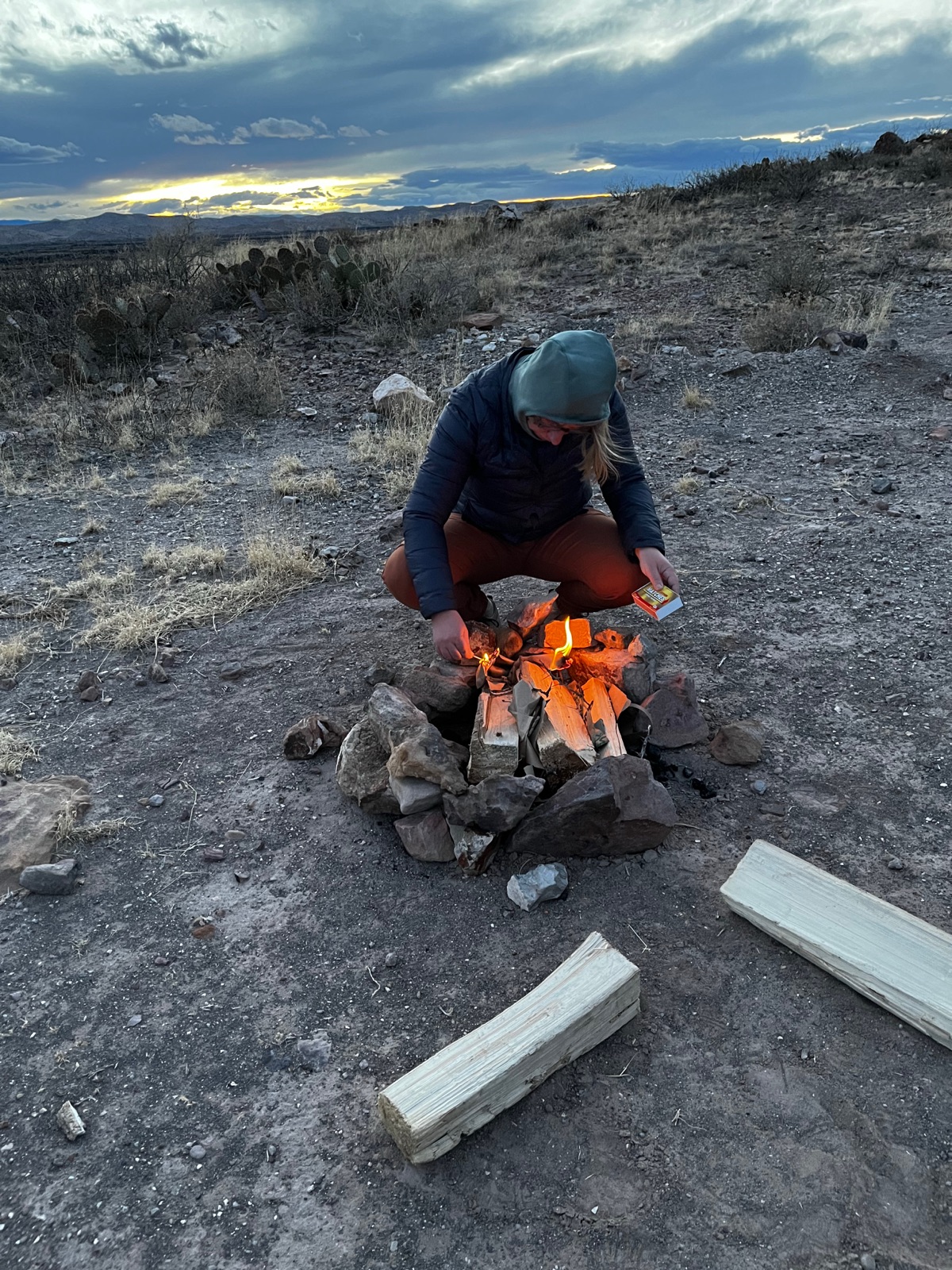
We really wanted to camp a little after several days in Airbnbs, so we headed to a BLM (Bureau of Land Management) called Valley of Fires. In the hierarchy of campsites, BLM campsites are considered less than National Park campsites, but they can sometimes surprise. This one was really nice and even had hot showers - definitely a winner. It is located in a lava island, a piece of land that was slightly higher than the surrounding, and thousands of years ago when lava flowed through cracks in the ground nearby for 50 or 100 years, it flowed around that piece of land. So today it looks like an island of land in the middle of huge basalt fields. The annoying part was that there was a Pacific weather system making its way through the region, and when we arrived at the campsites it was very windy, and even rained a bit. We slept well in our warm car-tent, with the wind blowing against the side of the car all night.
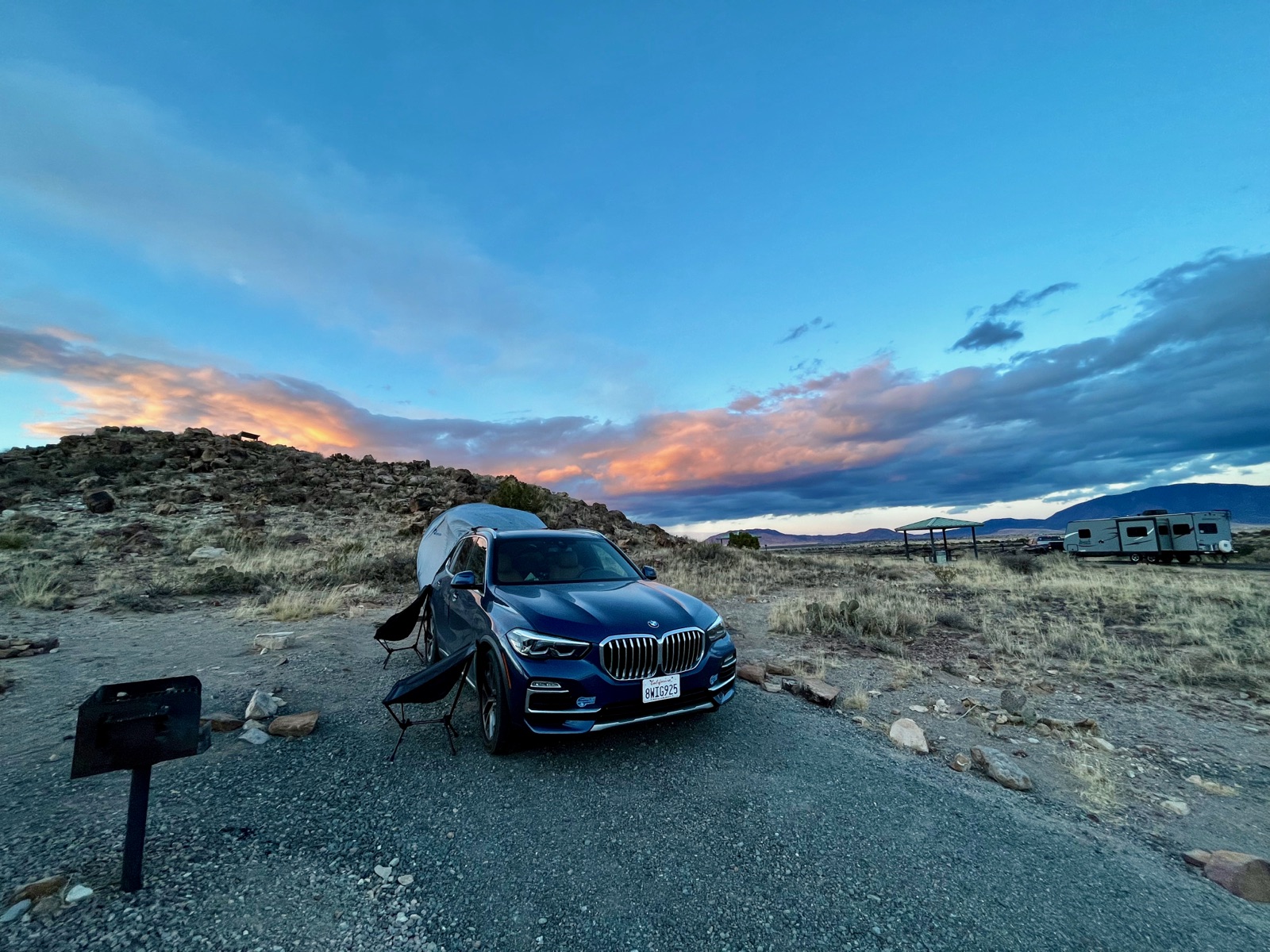
The following morning woke up to a very cold morning. We got in the car and drove to the nearest gas station to fill up gas for the long drive ahead, only to discover that the fuel door hinge froze over night and would not open.
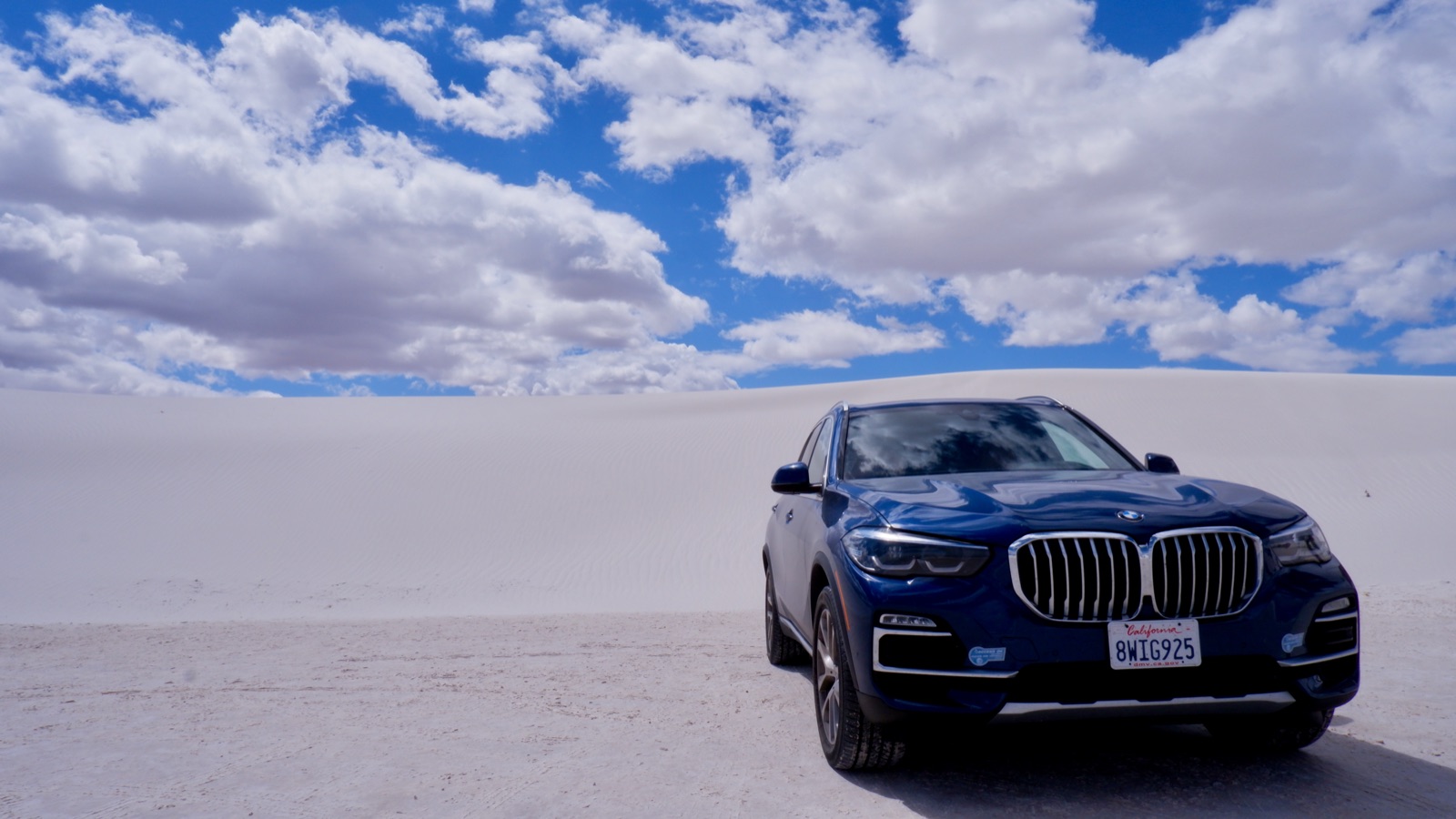
Our car is a really well designed car. It is comfortable, and drives really well. It effortlessly cruises at whatever speed I want - 50 mph or 90 mph. It makes covering the distances much nicer than any other alternative. But some things about it are over engineered. Like the fuel door. It is a nice idea to make a fuel door that locks when the car is locked, it is probably helpful in preventing fuel theft. It is also nice to have the fuel door open when you unlock the car with the key fob clicker. But all those features require a little motor to move the hinge that controls the fuel door. And that motor is yet another thing that can break (or freeze). It was quite stressful at the gas station - we had some fuel and some charge in our battery (we have a plug in hybrid so we can drive for some distance on electricity). The total range was 132 miles. Google said the distance to the nearest dealership was 140 miles. So we decide to at least try and get as close as we can to the dealership, and I start driving slow - 45 mph max in a 65 mph road. There were several really annoyed trucks behind me (they eventually passed us), but I was thinking of wind resistance, which is the biggest factor a car needs to push against when it is going fast. Wind resistance goes up exponentially, with the square of the speed. The range calculations of the car assume driving at the usual speed, and if I drive slower, I will use significantly less energy, which might increase our range. Sure enough, by the time we got to the next gas station we were at 99 miles to the dealership and 100 miles range. We tried again to open to fuel door and this time it opened. I guess the sun and the warming day helped unfreeze the hinge.
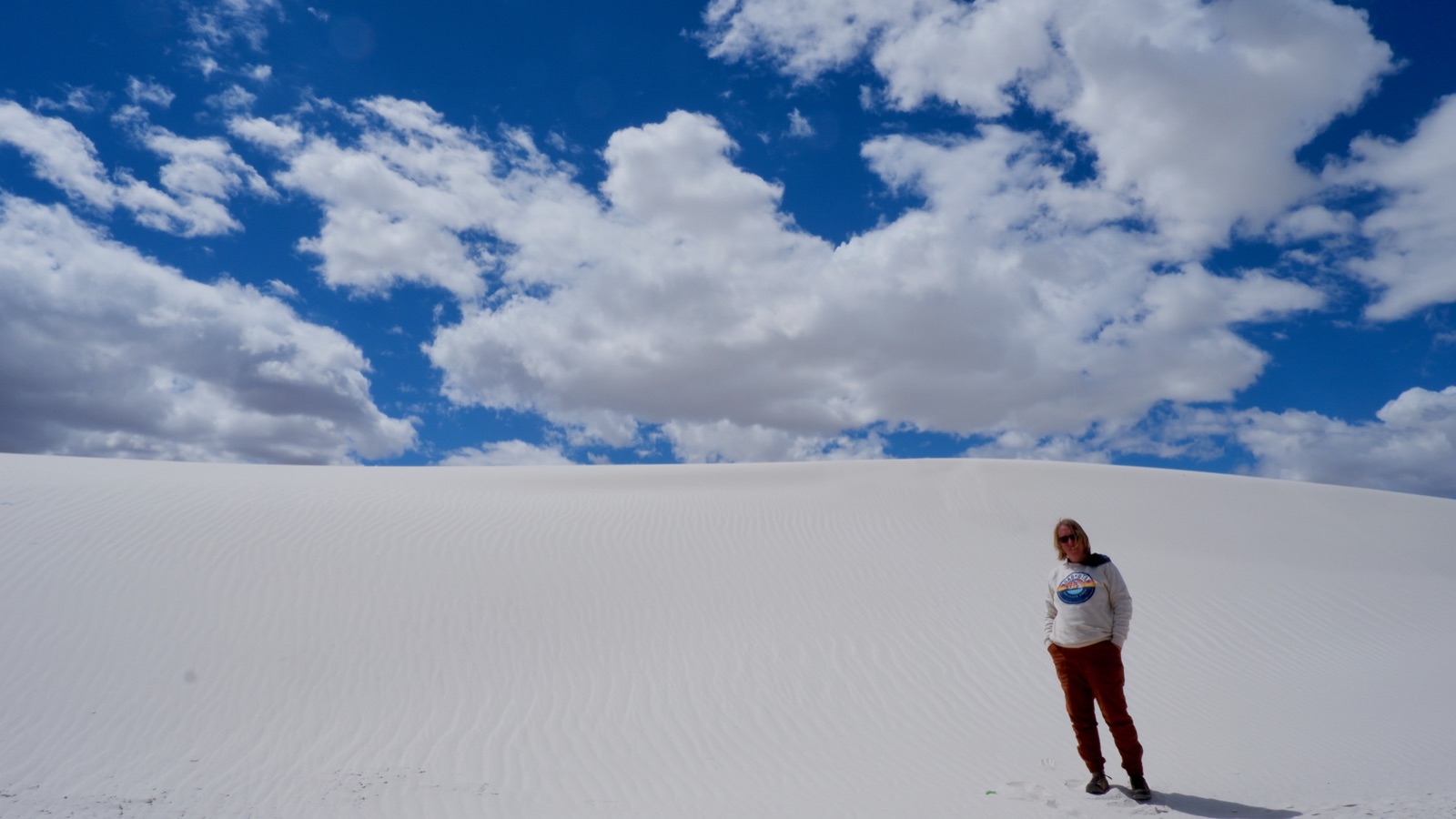
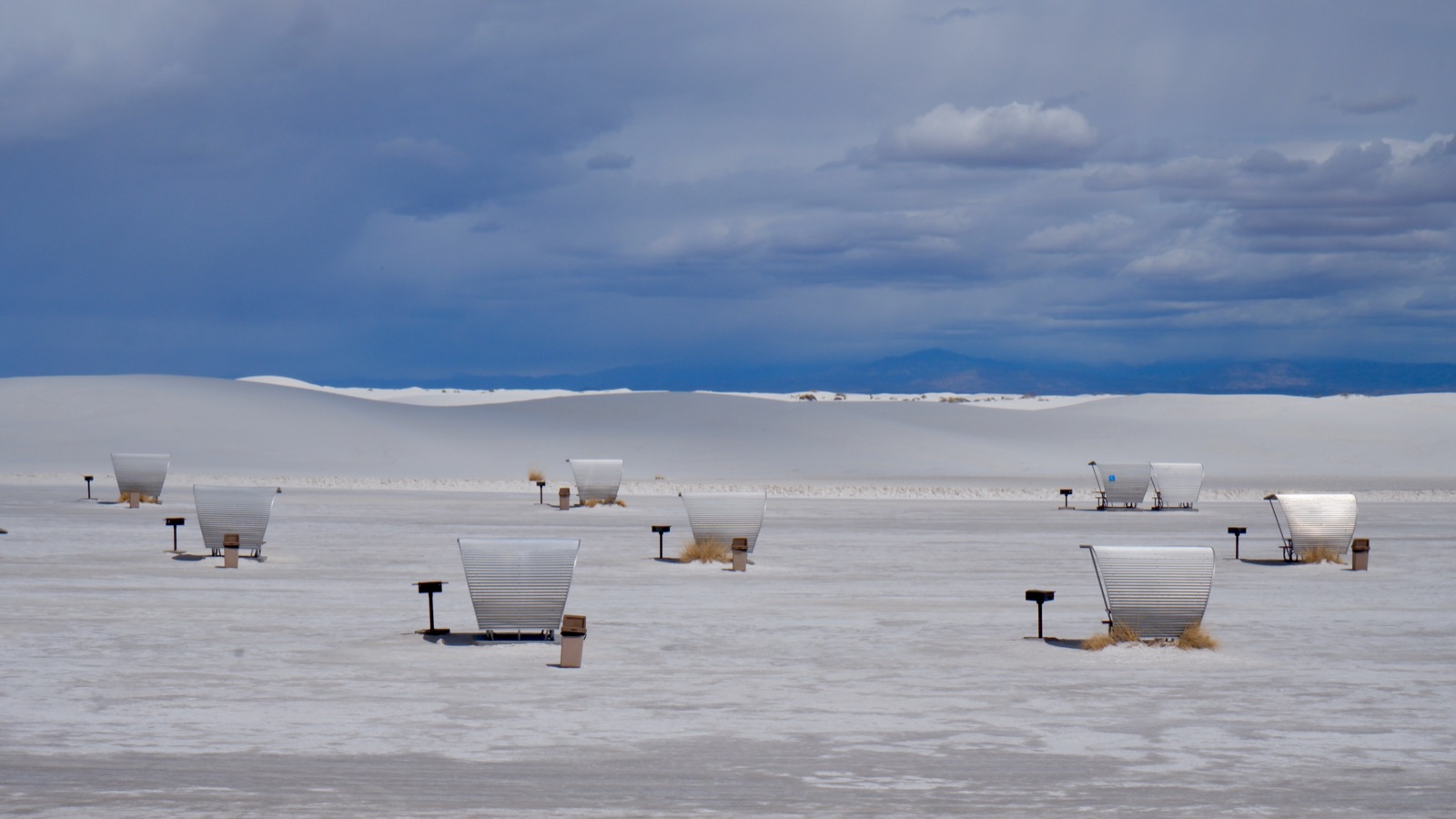
We decided to continue with our original plan and visited White Sands National Park, still in windy and slightly rainy weather, but still managed to have a nice picnic in the gypsum dunes and take some really nice pics. That night we had another reservation for a campsite, but because the weather was still rough, we instead booked a room at a nice hotel in El Paso, Texas.
(previous post here)
(next post here)