Leaving Memphis we are now in “going home” mode. We have about 2,000 miles to cover, and we intend to do it in two weeks. This is not super fast pace, but faster than the pace thus far.
We wanted to visit a friend in Denver which is about 1000 miles away so we were thinking of 3 stops along the way. First we wanted to explore the Ozarks a little bit. This area has a bad rap partially due to the Netflix series of the same name. Stopping at a truck stop right before leaving the interstate and starting to climb into the mountains another reason why this place gets a bad rap becomes apparent. A bunch of NRA-created stickers and t-shirts are for sale with slogans like “this girl doesn’t retreat - she reloads“. Conceal carry is allowed in these parts without any licensing or training, and a friend of a friend with property in the area once said that “… everyone is carrying so everyone is polite” of gun culture here. Ok, I will NOT wear my AOC “Green New Deal” t-shrit for the next few days.

The reason we are risking life and limb in going into these parts is that it is really pretty here. The Ozarks are the first real mountains we encountered since leaving New Mexico. Our path through Texas, Louisiana, Mississippi, Alabama and Tennessee has been basically flat all the way. At some point I realized I was missing the view of mountains. In the bay area you always see some mountain in the distance somewhere. The Ozarks reminded me of areas in the Sierra Nevada where it seems like there are endless undisturbed forests stretching up and down the mountains for as long as the eye can see. At some point we stopped at a lookout and admired the canopy of this massive, dense green forest covering the range.
We stayed for one night at an Airbnb near a vacation town called Eureka Springs. There are hot springs here that have some minerals in them and have long had a reputation for healing all sorts of ailments. Developed since the 19th century it is considered a great example of a Victorian vacation town. It is built on the mountain side around the springs and is full of winding steep streets and staircases. We arrived here at night after a long day driving and just as the rain was starting to come down hard. So we only got a taste of the city the following day, after checking out of our Airbnb. We walked around and both of us felt like we need a bit more time to here, and just didn’t feel like we want to hop back in the car for another long day of driving. So when we walked by the old Crescent Hotel and Spa it became cleat we are going to stay there for the night. Luckily the tourism season is just getting underway and there are still rooms available on short notice.
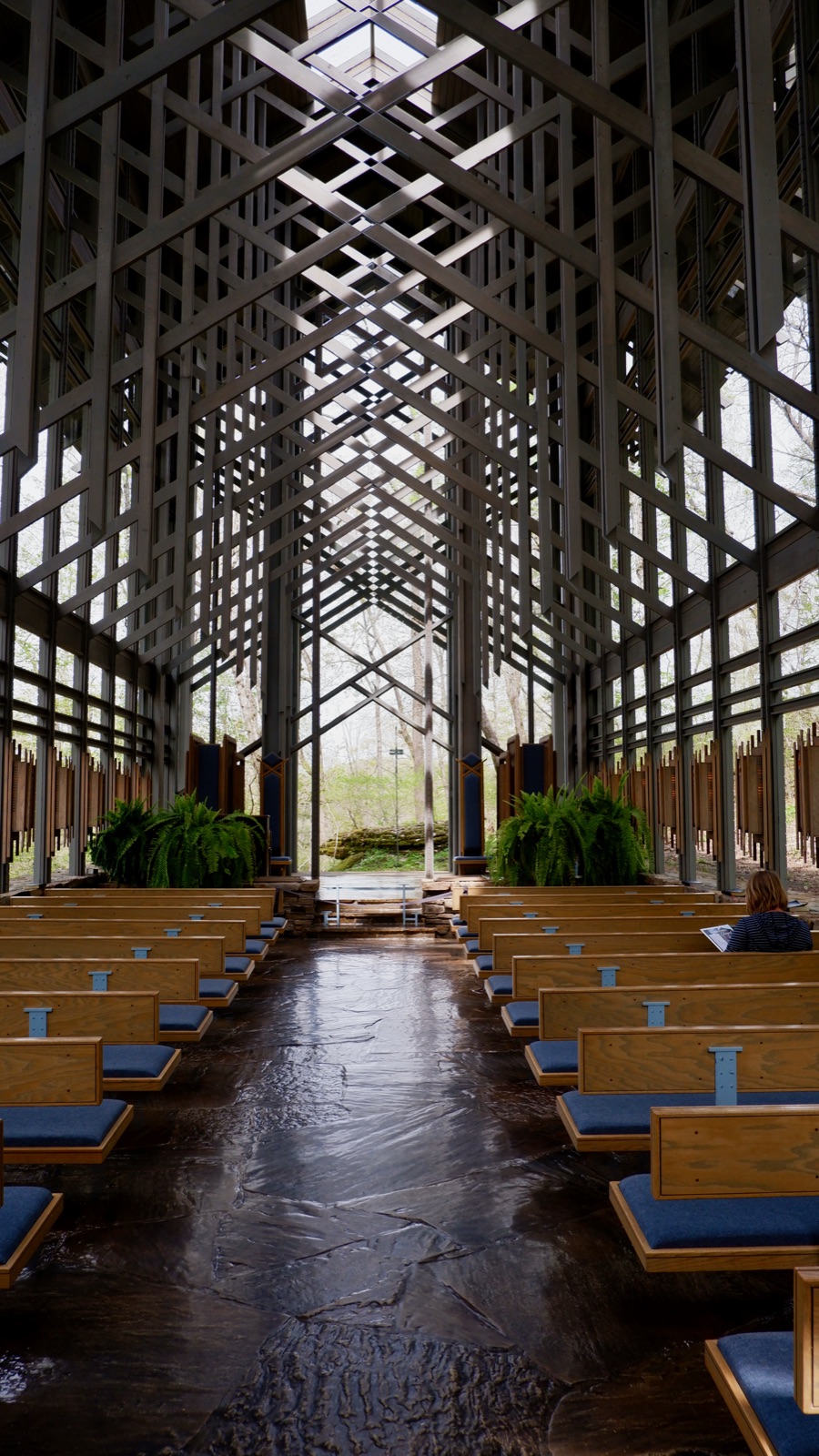
That afternoon we went to a really wonderful church about 10 minutes drive from town. It was built in the woods and is designed with great awareness to its surroundings. It is made of wood and huge glass windows, and you really feel like you are outside in nature when you are in it. I can only imagine how it must feel to be there when there’s a lightning storm.
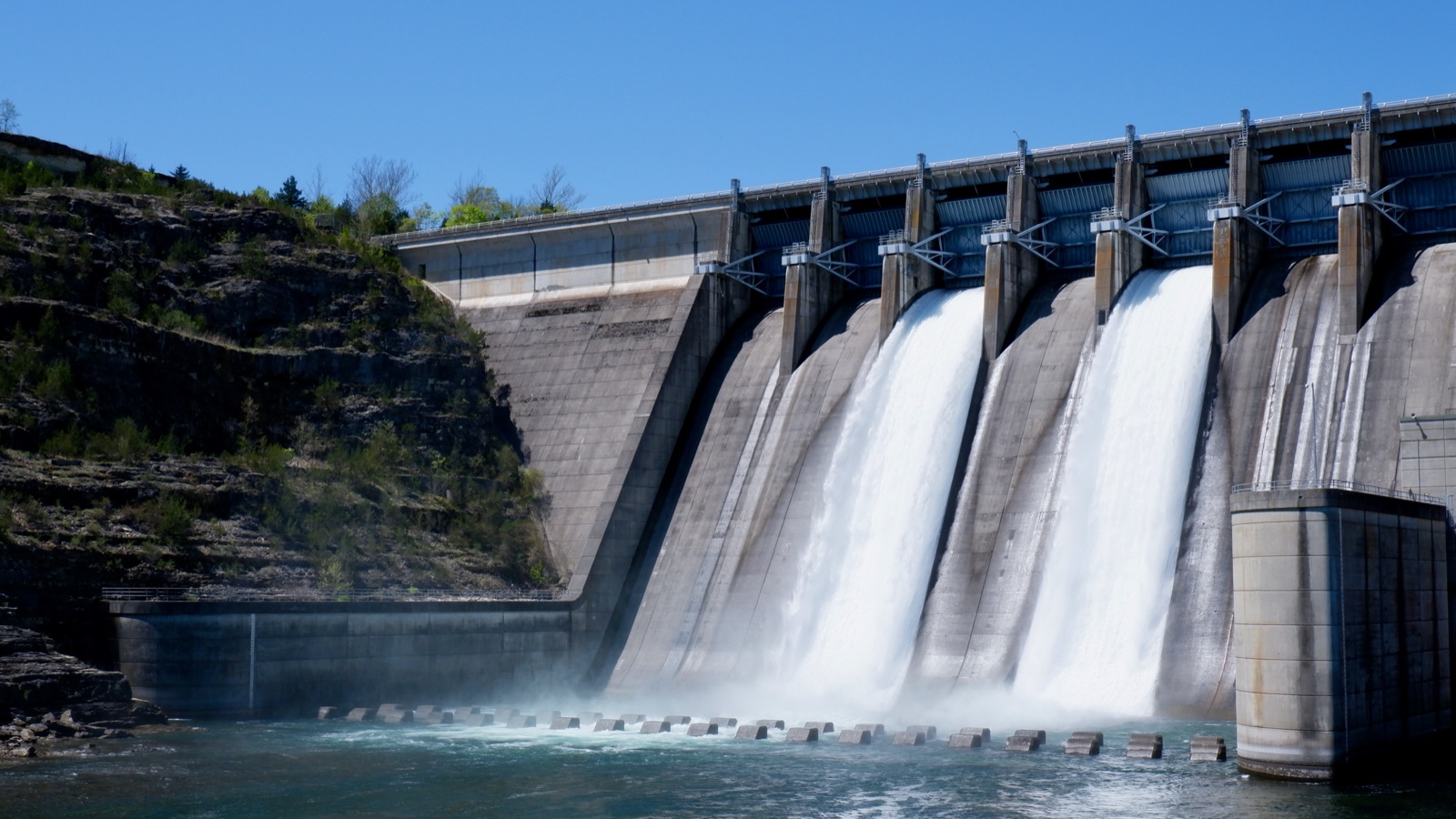
We were headed to get to Wichita, Kansas the next day. On the way I had to take a technical call related to some consulting I’m doing, so we stopped at a little artificial lake where I could do my call while Orit could chilled and read a book.
Then we stopped at one last place before leaving the Ozarks - Bentonville. Its main claim to fame is as the birth place and headquarters for Walmart and a small museum now stands where the first Walmart store once was. Walmart is a really interesting company. It is often vilified for treating its employees poorly, for paying wages that are so low that some of its employees have to rely on food stamps, for intentionally choosing to locate its stores just outside municipal boundaries to avoid paying municipal taxes thus depriving small towns of badly needed income and for competing unfairly with other stores and ultimately driving them out of business, leaving communities completely dependent on Walmart for most of their shopping.
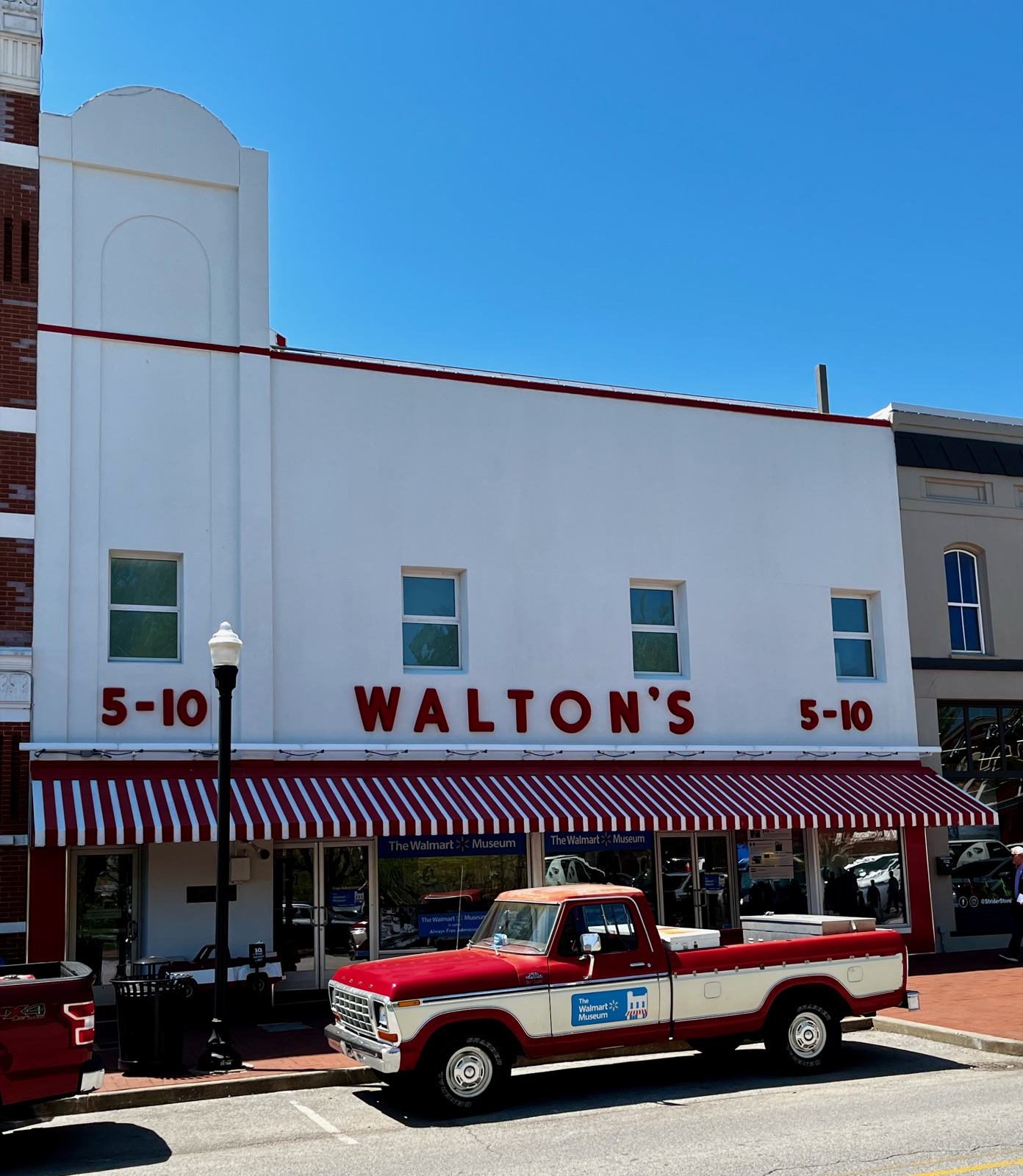
At the same time, Walmart is really impressive. Through their drive to reduce cost they’ve built one of the most innovative logistics operations in the world. They use many sustainable practices like reducing waste, recycling, natural lighting and highly fuel efficient trucks not necessarily because of a strong commitment to the environment but because they make business sense. They innovate in the FinTech space. They contribute to open source initiatives. This is not a purely evil enterprise as they are often portrayed. So how to reconcile these seemingly conflicting sets of evidence?
To me the root of the problem rests on two pillars: unbridled capitalism and lack of stakeholder accountability.
Unbridled capitalism makes us feel like it is ok to want to maximize profit and compete vigorously to make the business grow without regard to anything but the financial bottom line. In that sense, Walmart is just like Microsoft, Netflix, Google or Facebook. All those companies have fought fiercely against rivals, and in many cases either bought them or drove them out of business. Anyone remember AltaVista? Netscape? Friendster? Blockbuster? We seem to feel it is ok to just fiercely compete, and Walmart is doing just that. Because Walmart has brick and mortar stores and competition means other stores close down it feels different, but it is the same capitalist story. If a community were to intervene in favor of a mom and pop store to help it survive despite brutal competition from Walmart, that would certainly not be purely capitalist, but would it be wrong? I don’t think so. Visiting Clarksdale and seeing what a food desert it has become because the only place to shop is Walmart definitely does not feel like a good solution.
Stakeholder accountability does not exist in Walmart nor in Big Tech. All those companies are accountable to the shareholders, which are the people holding their shares, not their stakeholders, which is a broader group that includes shareholders, but also employees and the communities in which they operate. If Walmart cared about the community in which it operated, it would not want its employees to make such a low wage as to require food stamps. That only helps Walmart’s short term financial goals, but has a bigger negative long term impact on the community. The same goes for Facebook and political ads. All the seemingly high moral ground of freedom of speech is just a convenient charade to hide a hugely profitable enterprise that helps Facebook’s short term profits but has bigger long term negative effects on democracies all around the world. A model of a company that is accountable to its stakeholders already exists - in the U.S it is called a B corp, and many business are already certified B corporations. Sadly, neither Walmart nor Big Tech are.
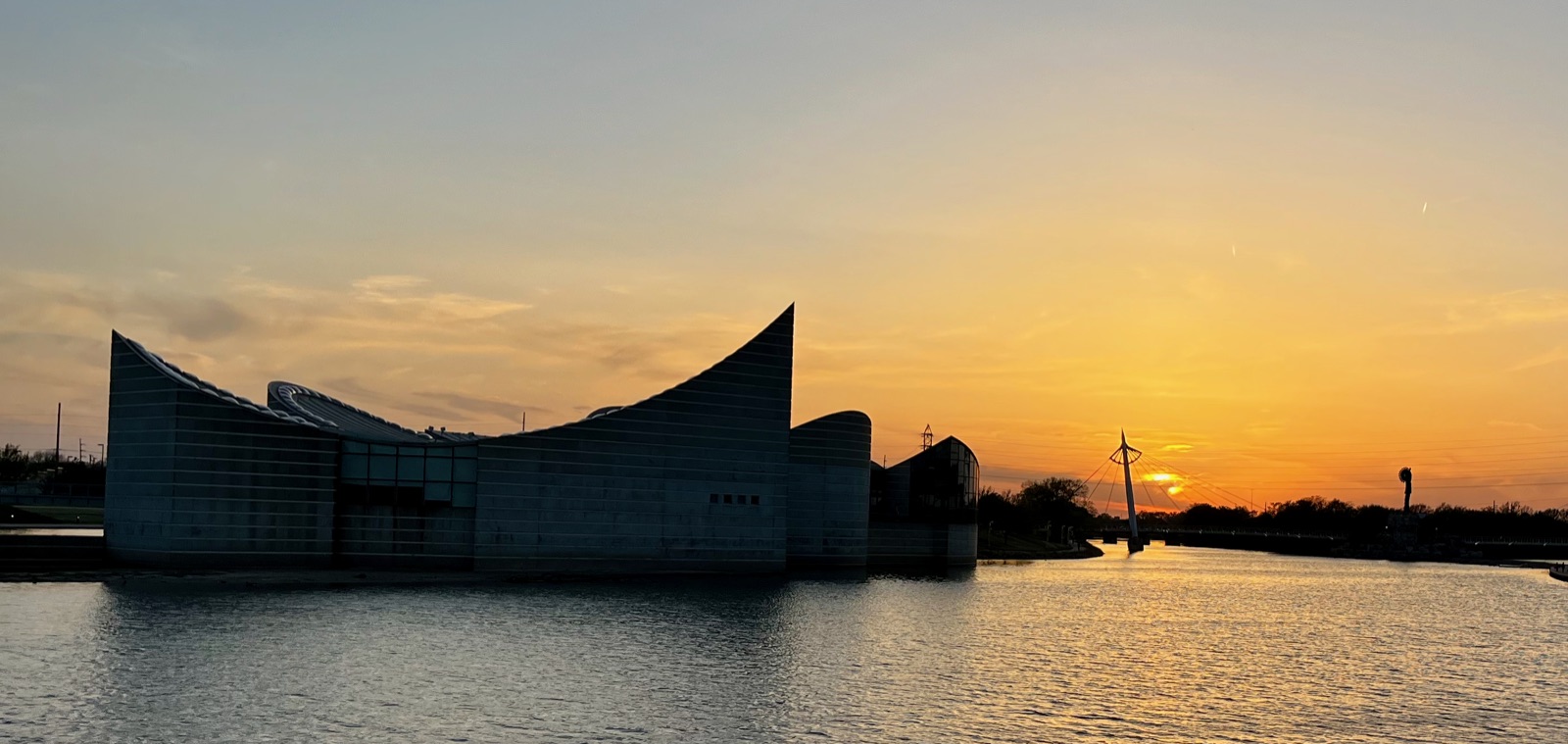
In any case, the museum itself was not super interesting, and after a short and pleasant stop at a hipster cafe in Bentonville, we continued on our way to Wichita. The road became flat and incredibly boring. We arrived in Wichita in late afternoon and went for a much needed walk after the long drive. The walk along the Arkansas rive was pretty and the sunset added a dramatic flare to the views. We walked next to a children’s museum built on the banks of the river and after being really impressed with the architecture discovered (thanks Google…) that it was built by Moshe Safdie, a world famous Israeli-American-Canadian architect. Wichita turned out to be a pleasant town though by the time we were done with our walk everything had closed down so we settled for a meal at a sports bar near our hotel. Oh well.
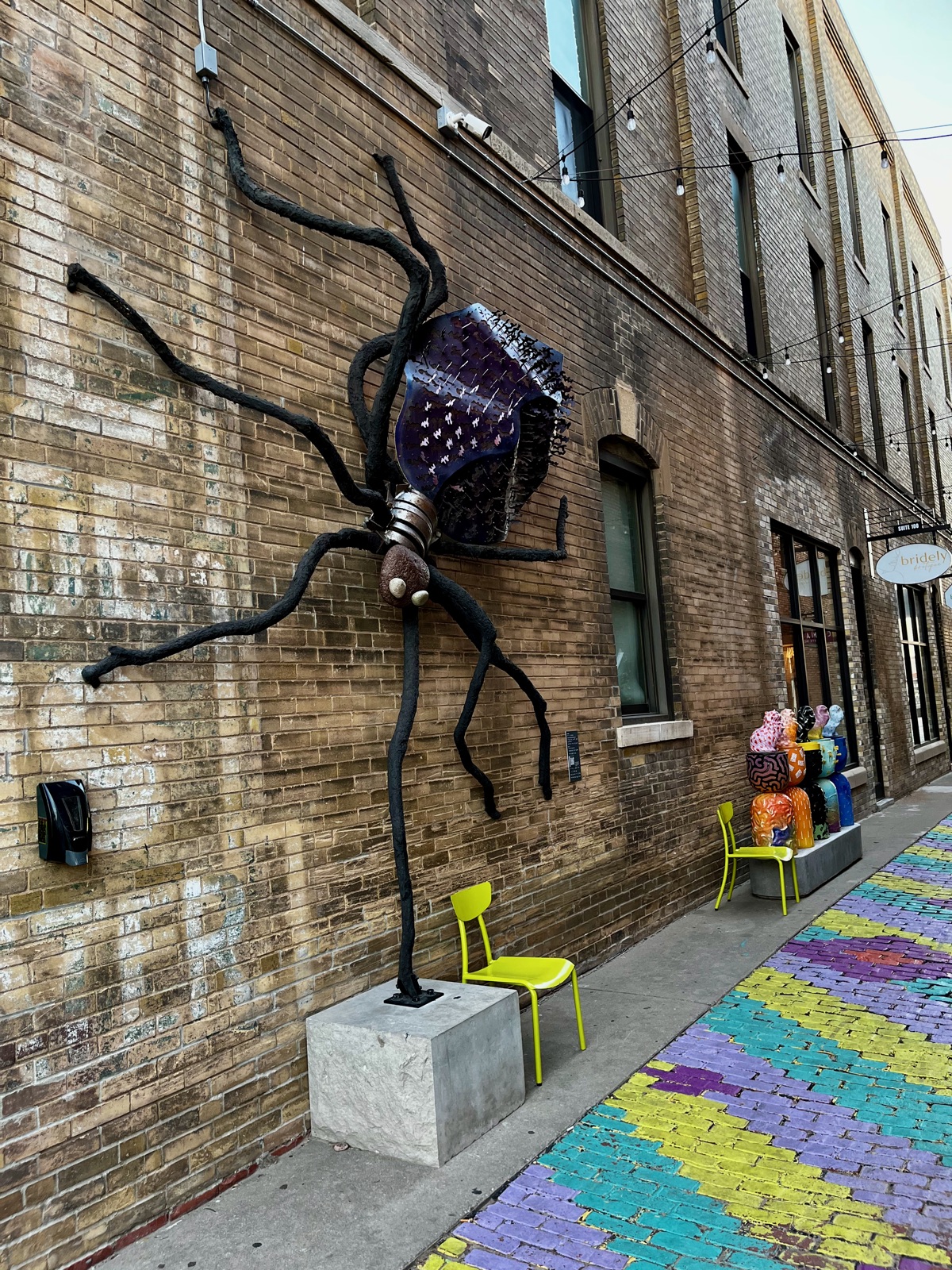
The next day we had something exciting planned. There is a salt mine about an hour out of Wichita that you can visit. The mine is still active, but some of the older areas which are now abandoned have been turned into a visitor center and a archive. The constant temperature and perpetual stable low humidity 650 feet below ground make for a perfect place in which to archive stuff.
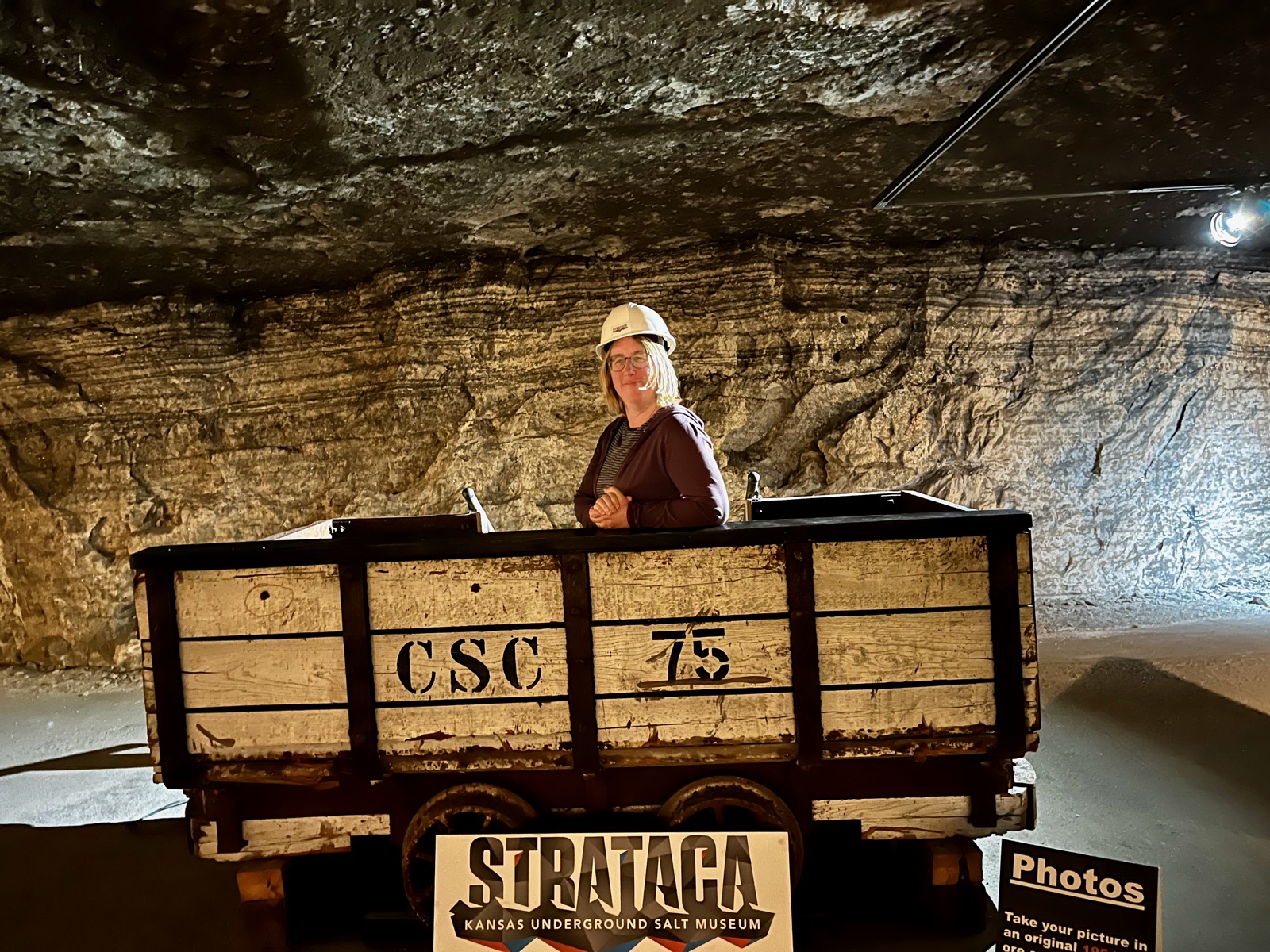
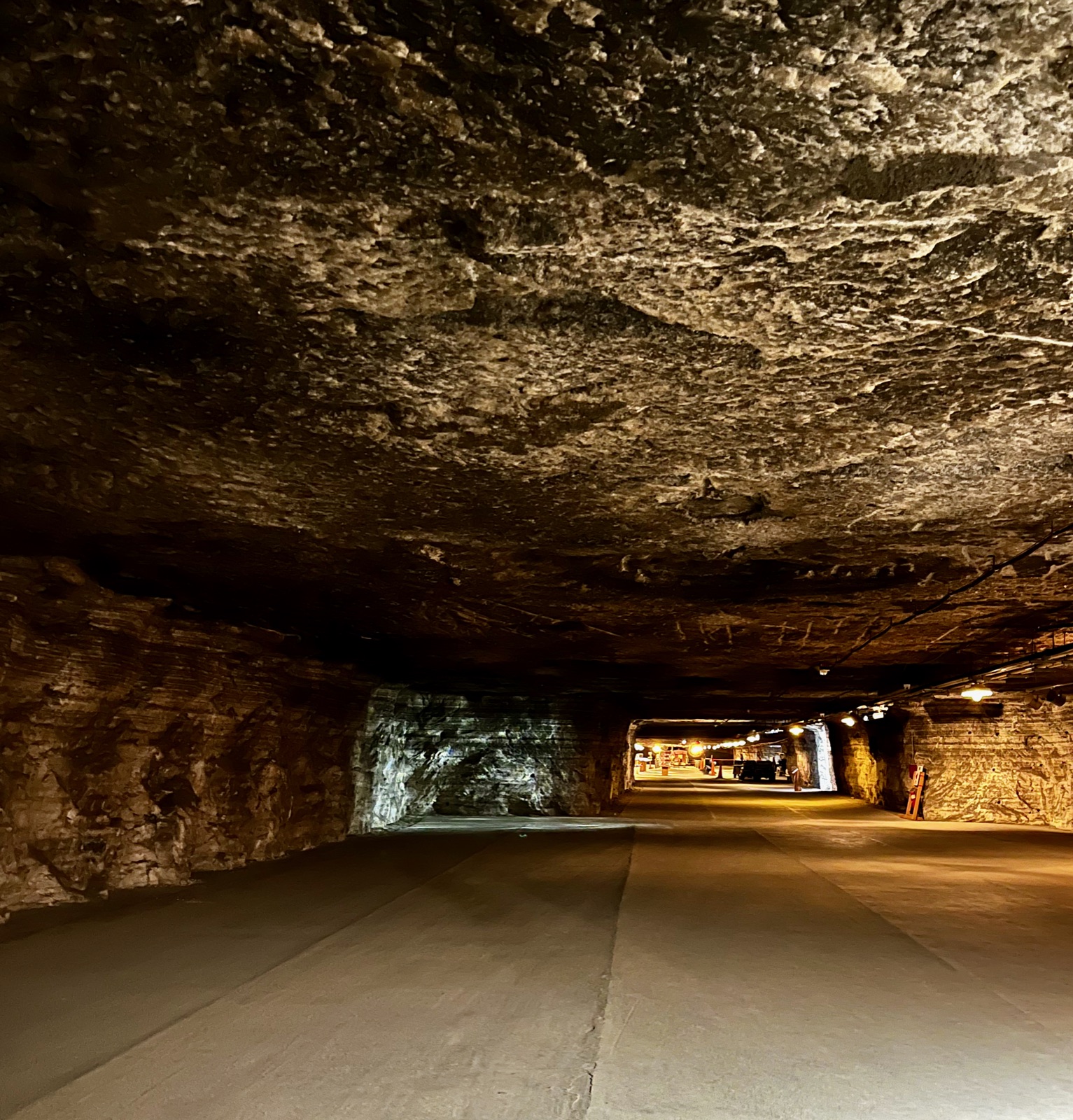
The mine is huge. It stretches underground for many miles in all directions, and all but the edge where active mining is taking place is huge flat giant rooms. Huge fans bring in fresh air. The mine is so big that once a year they do a 10k race inside it, and only in a small section of it. It was a great experience to visit the depths and learn about how salt is mined (using dynamite) and how the mine evolved over the past 100 years. Technology did indeed make a huge difference and today it takes only a handful of employees to operate.
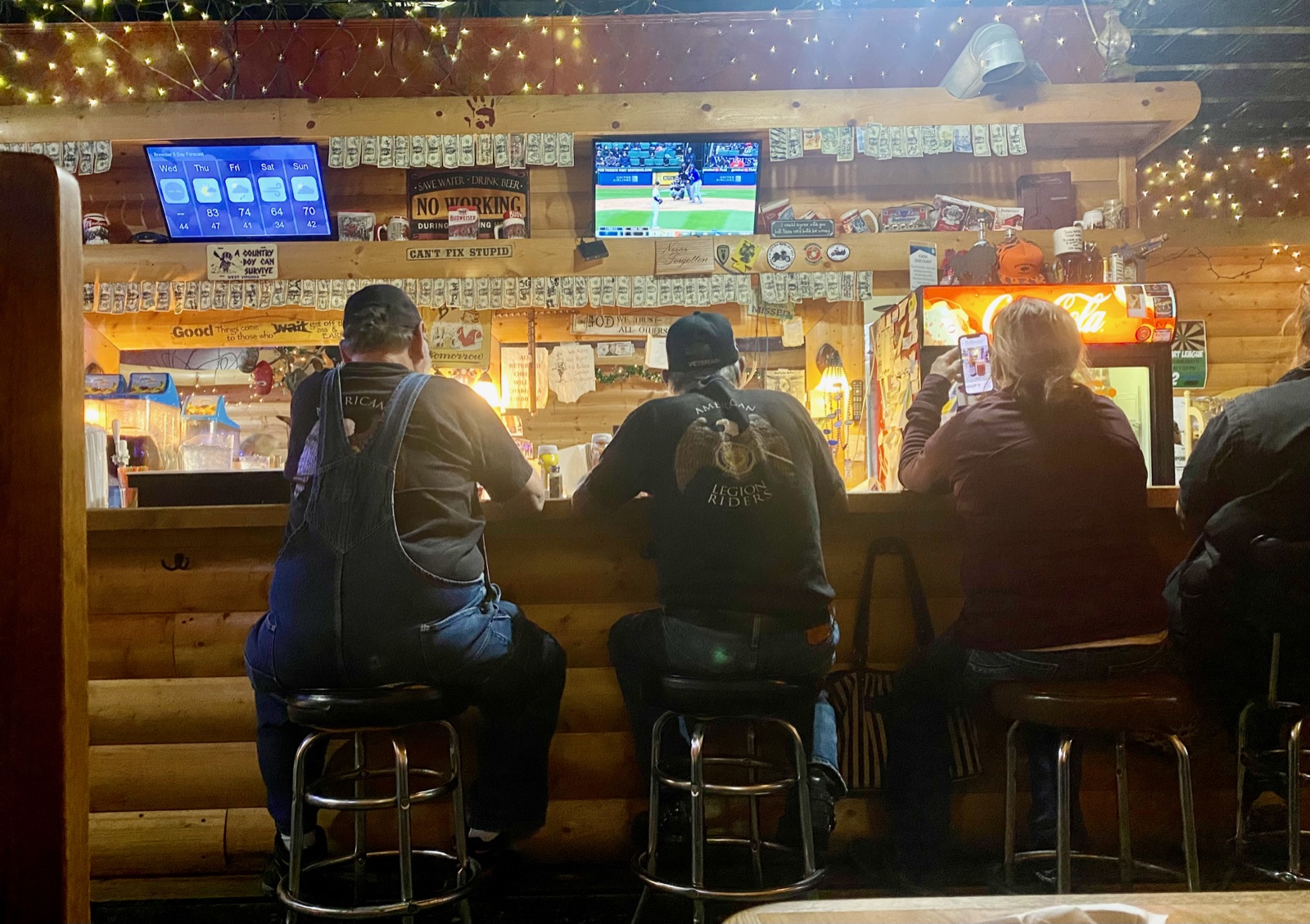
From here we drove to Goodland, KS, our last stop before Denver. We stopped here only because we didn’t want to drive long into the night - as it were we spent another 4.5 hours in the car, and from Goodland to Denver it is another 3.5 hours. It was just a quick overnight pit stop. On the way to Goodland we stopped for dinner in Oakley, KS, in a small pub where everyone else was local. It was the kind of place I saw many times in movies, and it was fascinating to be in a real life one.
And though the drive to Denver felt flat and boring, the road did slowly but surely rise in altitude until we arrived at Denver which is over 5000 feet elevation. We were pretty tired from all that driving, but still had plans for the evening. More on that later.
(previous post here)